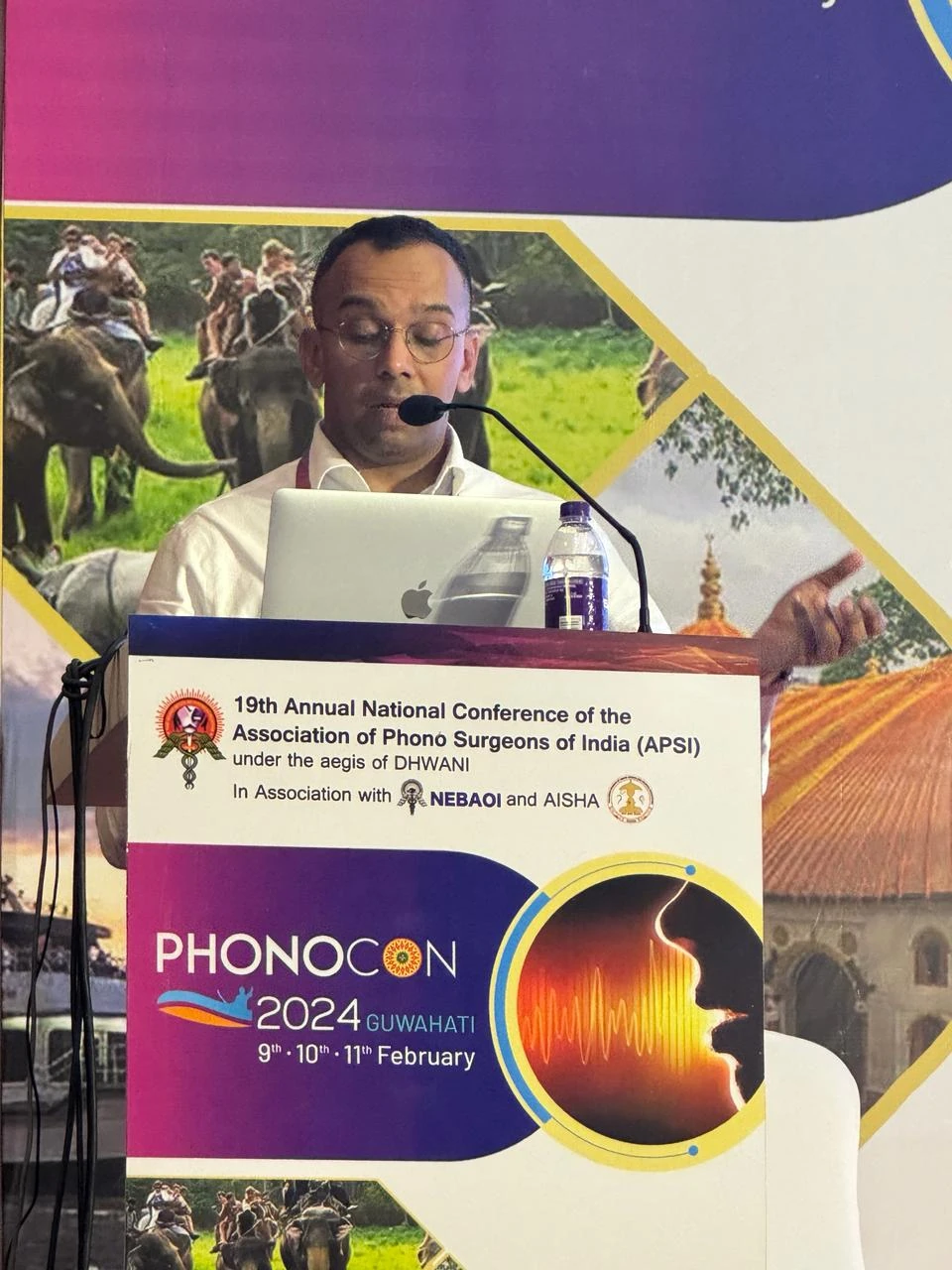
Chennai's Expert in Minimally Invasive Salivary Gland Treatment

Dr. Vidhyadharan Sivakumar offers advanced sialendoscopy—a minimally invasive technique to diagnose and treat salivary gland disorders without removing the gland. Using a tiny endoscope inserted through the natural duct opening, he can remove stones, dilate strictures, and treat chronic infections while preserving your salivary gland function.

Traditional treatment for salivary stones often required complete gland removal. With sialendoscopy, most patients can keep their glands and return to normal eating within days. Dr. Vidhyadharan's expertise in this advanced technique means less pain, no visible scars, and preservation of natural saliva production.

Credentials & Expertise

Sialendoscopy specialist | Gland-preserving approach | Minimally invasive stone removal | Stricture dilation expertise | Same-day discharge | No external scars
Salivary Gland Conditions Dr. Vidhyadharan Treats

Salivary Gland Stones (Sialolithiasis)
Submandibular Gland Stones
Parotid Gland Stones
Salivary Duct Strictures (Narrowing)
Chronic Sialadenitis (Recurrent Gland Infections)
Blocked Salivary Ducts
Recurrent Parotid Swelling
Juvenile Recurrent Parotitis
Radioiodine-Induced Sialadenitis
Sjögren's Syndrome-Related Symptoms
Post-Radiation Salivary Problems
Salivary Gland Cysts

When to See a Salivary Gland Specialist

Consult Dr. Vidhyadharan if you experience:

Painful swelling under jaw or near ear during meals
Swelling that increases while eating
Recurrent episodes of gland swelling
Pus discharge from under the tongue
Dry mouth with gland swelling
Hard lump felt under the tongue or jaw
Foul taste in mouth
Difficulty opening mouth during swelling
Fever with facial swelling
Persistent gland enlargement
Pain when eating sour or acidic foods
Previous failed stone removal attempts

Early diagnosis improves outcomes

Treatments

Dr. Vidhyadharan's Sialendoscopy Techniques

Diagnostic Sialendoscopy

Direct visualization of salivary duct interior using a miniature endoscope (1.1-1.6mm). Identifies stones, strictures, mucus plugs, and inflammatory changes. Performed under local or general anesthesia with no external incisions.

Sialendoscopic Stone Removal

Removal of salivary stones using specialized baskets, graspers, or laser fragmentation through the endoscope. Stones up to 8mm can often be removed endoscopically. Larger stones may require combined approach.

Duct Dilation & Stenting

Balloon dilation of narrowed salivary ducts (strictures) to restore normal saliva flow. Temporary stents may be placed to maintain patency during healing. Effective for post-inflammatory or post-radiation strictures.

Combined Approaches

For large or impacted stones, sialendoscopy-assisted surgery combines endoscopic visualization with small external incision (under the jaw or inside the mouth) for complete stone removal while preserving the gland.

Why Choose

Why Choose Dr. Vidhyadharan for Salivary Gland Problems

Expertise in sialendoscopy—Chennai's specialized minimally invasive approach

Gland-preserving philosophy—avoid unnecessary gland removal

Advanced endoscopic equipment for precise diagnosis and treatment

High success rate for stone removal and stricture treatment

Same-day discharge for most procedures

No visible external scars

Experience with complex and recurrent cases

Multidisciplinary care for autoimmune-related salivary problems

Advanced Technology & Techniques

Sialendoscopes (1.1mm - 1.6mm)Stone Retrieval Baskets & GraspersHolmium Laser for Stone FragmentationBalloon Dilation CathetersSalivary Duct StentsHigh-Definition Endoscopic Camera
Your Journey

Your Sialendoscopy Journey with Dr. Vidhyadharan

Understanding what to expect helps reduce anxiety and prepares you for treatment

1

Initial Consultation & Imaging

Clinical examination, review of symptoms, and imaging studies (ultrasound, CT scan, or sialography). Assessment of stone size, location, and duct anatomy to determine optimal treatment approach.

2

Treatment Planning

Discussion of diagnosis and treatment options. For small stones and strictures, sialendoscopy alone may suffice. Larger stones may require combined approach. Consent and pre-procedure instructions provided.

3

Sialendoscopy Procedure

Performed under local or general anesthesia (45-90 minutes). Endoscope inserted through natural duct opening. Stone removed or stricture dilated. No external incisions in most cases.

4

Same-Day Recovery

Most patients go home within hours. Mild swelling and discomfort for 2-3 days. Soft diet initially, then normal eating. Antibiotics and anti-inflammatory medications as needed.

5

Follow-Up & Prevention

Review at 1-2 weeks to confirm resolution. Guidance on hydration and sialagogues to prevent recurrence. Ultrasound surveillance for patients with history of multiple stones.

FAQs

Frequently Asked Questions

Sialendoscopy is a minimally invasive procedure where a tiny endoscope (1.1-1.6mm diameter) is inserted through the natural opening of the salivary duct in the mouth. This allows direct visualization of the duct interior, identification of stones or strictures, and treatment using specialized instruments—all without any external incisions. The procedure is performed under local or general anesthesia and most patients go home the same day.

Salivary stones (sialoliths) form when calcium and other minerals in saliva crystallize, often due to dehydration, reduced saliva flow, or duct abnormalities. The submandibular gland is most commonly affected (80-90% of cases) because its saliva is thicker and the duct travels upward against gravity. Risk factors include dehydration, certain medications that reduce saliva, and chronic gland infections.

With sialendoscopy, most patients can keep their salivary glands. Gland removal (sialadenectomy) is now reserved for cases with very large stones not amenable to endoscopic removal, severe chronic infection with gland destruction, or suspected tumors. Dr. Vidhyadharan's gland-preserving approach means you maintain natural saliva production and avoid risks of gland removal surgery.

Sialendoscopy has 85-95% success rates for stone removal when performed by experienced surgeons. Success depends on stone size, location, and duct anatomy. Stones under 5mm are usually removed endoscopically. Stones 5-8mm may require laser fragmentation. Larger stones may need combined approach. Even when complete stone removal isn't possible, sialendoscopy often relieves symptoms by improving saliva flow.

Sialendoscopy is well-tolerated with minimal pain. The procedure is performed under local anesthesia (numbing the duct opening) or general anesthesia depending on case complexity. Most patients experience only mild discomfort and swelling for 2-3 days afterward, managed with simple pain medications. There are no external incisions to heal.

Recovery is quick—most patients go home the same day and return to work within 1-2 days. Mild swelling and discomfort are common for 48-72 hours. Normal eating can resume within a day. Complete healing of the duct occurs within 1-2 weeks. This is much faster than traditional gland removal surgery which requires 1-2 weeks recovery.

Recurrence is possible in about 10-20% of patients, especially those with predisposing factors like chronic dehydration, abnormal duct anatomy, or autoimmune conditions. Prevention strategies include staying well-hydrated, using sour candies or lemon to stimulate saliva flow (sialagogues), and managing underlying conditions. Even if stones recur, sialendoscopy can be repeated.

Traditional surgery removes the entire salivary gland through an external incision, with risks of facial nerve injury (for parotid), visible scar, and permanent loss of saliva production. Sialendoscopy uses the natural duct opening—no external incision, no scar, preserved gland function, same-day discharge, and faster recovery. It has revolutionized salivary gland stone treatment.

Yes, sialendoscopy is effective for recurrent sialadenitis (gland infections). By removing stones, dilating strictures, and washing out the duct system, sialendoscopy eliminates the underlying cause of recurrent infections. It is also used for juvenile recurrent parotitis in children and radioiodine-induced sialadenitis after thyroid cancer treatment.

Strictures are narrowings of the salivary duct that block saliva flow, causing recurrent swelling and infections. They can result from previous stones, infections, radiation, or autoimmune conditions. Treatment involves sialendoscopic balloon dilation to widen the narrowed segment, sometimes with temporary stent placement. Multiple dilations may be needed for severe strictures.

Sialendoscopy costs depend on the complexity of the case, whether stone removal or just diagnostic evaluation is needed, use of laser for fragmentation, and anesthesia requirements. The procedure is cost-effective compared to traditional gland removal surgery due to shorter hospital stay and faster recovery. THANC Hospital and Dr. Vidhyadharan provide detailed cost estimates during consultation.

Yes, sialendoscopy is particularly valuable for children with juvenile recurrent parotitis—a condition causing repeated painful parotid swelling. Rather than waiting for the child to "outgrow" the condition, sialendoscopy can provide definitive treatment by washing out the duct system and dilating any narrowings. Dr. Vidhyadharan treats pediatric salivary gland disorders with age-appropriate care.

Have more questions? We're here to help.

Schedule a Consultation

Get Relief from Salivary Gland Problems

Don't suffer from painful gland swelling. Schedule your consultation with Dr. Vidhyadharan for minimally invasive sialendoscopy at THANC Hospital, Chennai