Meet Chennai's Leading Thyroid Surgery Expert

Dr. Vidhyadharan Sivakumar is a fellowship-trained Head and Neck Oncologic Surgeon with specialized expertise in thyroid and parathyroid surgery. With extensive surgical experience and advanced training from Australia, he offers the highest level of surgical care using state-of-the-art techniques including intraoperative nerve monitoring for voice preservation.

Having completed his MCh with First Rank and Gold Medal, followed by clinical fellowships at Royal Adelaide Hospital, Australia, Dr. Vidhyadharan brings internationally recognized expertise to Chennai. His meticulous surgical approach and use of advanced technology ensures optimal outcomes with minimal complications.

Credentials & Expertise

Extensive thyroid surgery experience | Fellowship-trained in Australia | Scarless robotic thyroidectomy available | Routine intraoperative nerve monitoring (IONM) | Expertise in complex and revision cases

Conditions Dr. Vidhyadharan Treats

Thyroid Cancer (Papillary, Follicular, Medullary, Anaplastic)
Thyroid Nodules & Goiter
Hyperthyroidism (Graves' Disease)
Thyroid Enlargement (Multinodular Goiter)
Recurrent Thyroid Cancer
Primary Hyperparathyroidism
Parathyroid Adenoma
Secondary & Tertiary Hyperparathyroidism
Parathyroid Cancer (Rare)
Thyroglossal Duct Cysts
Complex Thyroid Conditions
Substernal Goiter (Thyroid extending into chest)
Candidates for Scarless Thyroid Surgery

When to Seek Expert Evaluation

Consult Dr. Vidhyadharan if you experience:

Lump or swelling in the neck
Difficulty swallowing or breathing
Voice changes or hoarseness
Unexplained weight loss or gain
Rapid heartbeat or palpitations
Persistent cough not related to cold
High calcium levels in blood tests
Kidney stones or bone pain (parathyroid)
Family history of thyroid cancer
Previous radiation exposure to head/neck

Early diagnosis improves outcomes

Treatments

Dr. Vidhyadharan's Advanced Surgical Techniques

Thyroidectomy (Total/Partial)

Complete or partial removal of the thyroid gland for cancer, large nodules, or hyperthyroidism. Performed with meticulous technique to preserve surrounding structures and minimize complications.

Scarless Robotic Thyroidectomy

Robot-assisted thyroid removal through hidden incisions in the armpit (transaxillary) or behind the ear (retroauricular). No visible neck scar—ideal for young patients and those concerned about cosmesis. Same oncologic outcomes as conventional surgery.

Voice-Preserving Surgery

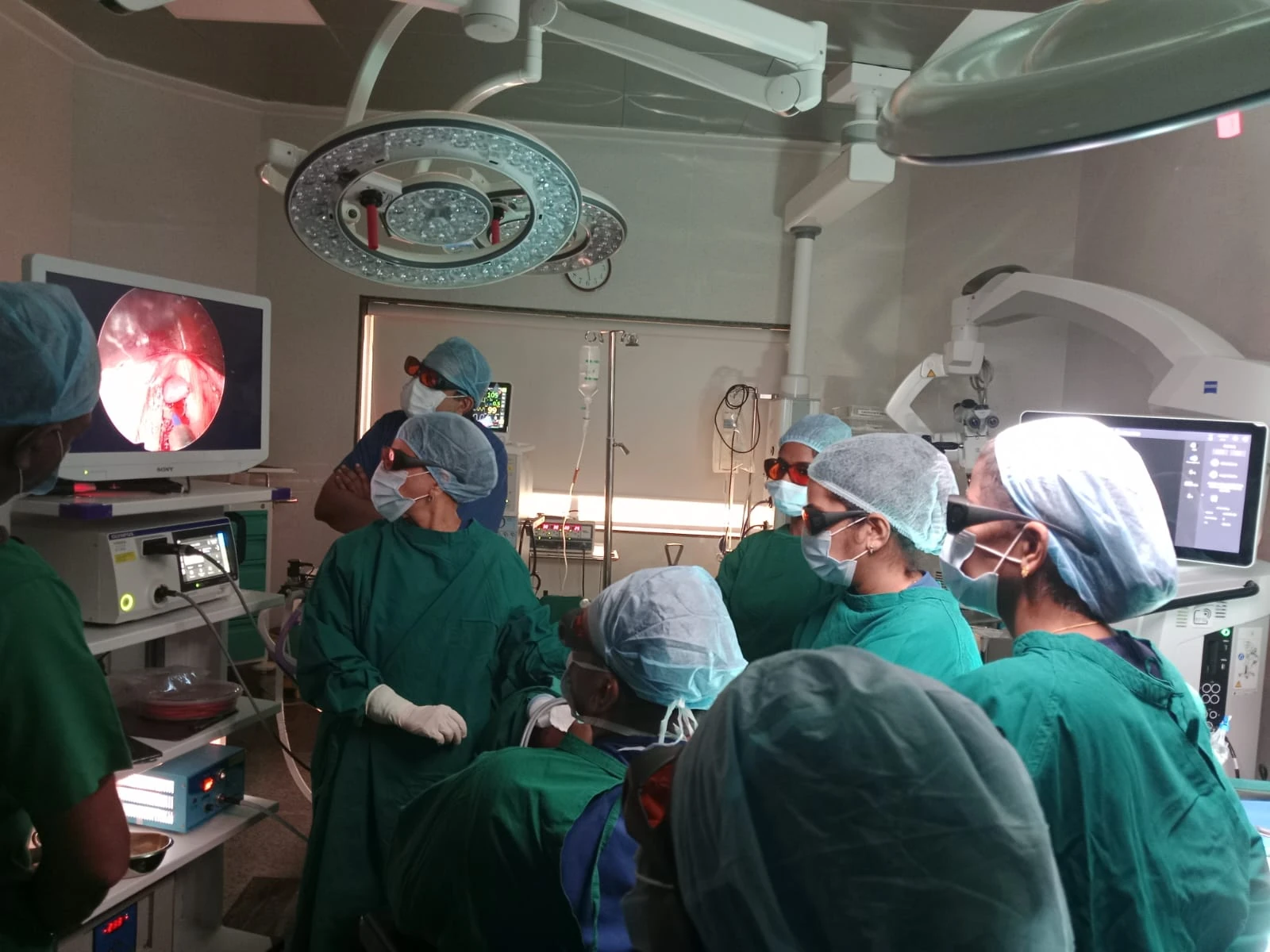
Intraoperative nerve monitoring (IONM) is used to identify and protect the recurrent laryngeal nerves during surgery, significantly reducing the risk of voice changes and preserving vocal cord function.

Minimally Invasive Parathyroidectomy

Targeted removal of parathyroid adenomas through small incisions using advanced localization techniques. Results in faster recovery, minimal scarring, and same-day discharge in many cases.

Central & Lateral Neck Dissection

Comprehensive removal of lymph nodes in the neck for thyroid cancer that has spread. Essential for complete cancer removal and reducing risk of recurrence.

Why Choose

Why Choose Dr. Vidhyadharan for Thyroid Surgery

Fellowship training in Head & Neck Oncologic Surgery with specialized thyroid cancer expertise

High-volume thyroid surgeon with extensive experience in complex and revision cases

Routine use of intraoperative nerve monitoring (IONM) for voice preservation

Expertise in minimally invasive and scarless thyroid surgery techniques

Comprehensive multidisciplinary approach with endocrinologists and nuclear medicine specialists

Access to advanced facilities at THANC Hospital for comprehensive thyroid care

Expertise in managing recurrent thyroid cancer and difficult cases

Focus on cosmetic outcomes with minimal visible scarring

Advanced Technology & Techniques

da Vinci Robotic Surgical SystemIntraoperative Nerve Monitoring (IONM)Ultrasound-Guided SurgeryTransaxillary & Retroauricular ApproachesHarmonic Scalpel TechnologyRapid Parathyroid Hormone (PTH) Testing
Your Journey

Your Thyroid Surgery Journey with Dr. Vidhyadharan

Understanding what to expect helps reduce anxiety and prepares you for treatment

1

Initial Consultation & Evaluation

Comprehensive clinical examination, review of imaging studies (ultrasound, CT/MRI), blood tests (thyroid function, calcium levels), and discussion of biopsy results (FNAC). We will explain your diagnosis and discuss all treatment options.

2

Pre-operative Planning

Detailed surgical planning including vocal cord examination (laryngoscopy), cardiac clearance if needed, and coordination with endocrinology team. We ensure you understand the procedure, risks, and expected outcomes.

3

Surgery Day

Surgery is performed under general anesthesia, typically taking 2-4 hours depending on complexity. Intraoperative nerve monitoring is used throughout to protect your voice. Most patients stay overnight for observation.

4

Recovery & Follow-up

Post-operative voice and calcium level monitoring. Drain removal within 24-48 hours if placed. Most patients return to normal activities within 1-2 weeks. Regular follow-up for thyroid hormone replacement and cancer surveillance if needed.

5

Long-term Care

Ongoing thyroid hormone management, periodic ultrasound surveillance, and blood tests. For thyroid cancer patients, coordination with nuclear medicine for radioactive iodine therapy if required and long-term cancer monitoring.

FAQs

Frequently Asked Questions

If your entire thyroid gland is removed (total thyroidectomy), you will need lifelong thyroid hormone replacement with levothyroxine. This is a simple daily medication that replaces the hormone your thyroid normally produces. If only part of your thyroid is removed (hemithyroidectomy), about 70-80% of patients do not require hormone replacement as the remaining thyroid tissue produces sufficient hormone.

With modern surgical techniques and intraoperative nerve monitoring (IONM), the risk of permanent voice changes is less than 1-2% in experienced hands. Temporary voice changes or hoarseness may occur in 5-10% of patients but typically resolve within a few weeks. Dr. Vidhyadharan uses IONM routinely to minimize this risk and preserve vocal cord function.

Most patients are discharged within 24 hours after surgery. You can typically return to desk work within 5-7 days and resume all normal activities within 2 weeks. Strenuous exercise and heavy lifting should be avoided for 3-4 weeks. The neck incision heals well with minimal scarring, and most scars fade significantly over 6-12 months.

Conventional thyroid surgery requires a 4-6 cm incision in the lower neck, which fades significantly over a year. However, for patients concerned about visible scars, Dr. Vidhyadharan offers scarless robotic thyroidectomy through hidden incisions in the armpit (transaxillary) or behind the ear. This leaves no visible neck scar while achieving the same surgical outcomes.

Robotic thyroid surgery uses the da Vinci surgical system to remove the thyroid through hidden incisions in the armpit or behind the ear, leaving no visible neck scar. Ideal candidates are patients with benign nodules or early-stage thyroid cancer who desire better cosmetic outcomes—particularly young patients, women, or those prone to keloid scarring. Dr. Vidhyadharan will assess your suitability based on thyroid size, nodule characteristics, and anatomy.

Yes, robotic thyroidectomy has equivalent safety and oncologic outcomes to conventional open surgery when performed by trained robotic surgeons. Studies show similar rates of voice preservation, complete cancer removal, and complication rates. The main difference is cosmetic—no visible neck scar. Dr. Vidhyadharan is FICRS-certified (Fellow of Indian College of Robotic Surgeons) with extensive robotic surgery experience.

Thyroid surgery is generally very safe when performed by experienced surgeons. Main risks include: temporary or permanent voice changes (1-2%), low calcium levels requiring supplements (temporary in 10-20%, permanent in 1-2%), bleeding (rare), and infection (rare). Dr. Vidhyadharan takes extensive precautions including nerve monitoring and careful parathyroid preservation to minimize these risks.

Not all thyroid nodules require surgery. Surgery is typically recommended for: confirmed or suspicious thyroid cancer on biopsy, large nodules causing symptoms (difficulty swallowing, breathing, or visible neck swelling), nodules with concerning ultrasound features, or hyperthyroidism not controlled with medication. Many benign nodules can be safely monitored with periodic ultrasounds.

Parathyroid surgery involves removing one or more overactive parathyroid glands that are causing high calcium levels (hyperparathyroidism). This is needed when high calcium causes symptoms like kidney stones, bone pain, osteoporosis, fatigue, or significantly elevated calcium levels. The surgery is usually performed through a small incision and most patients go home the same day.

If thyroid cancer has spread to lymph nodes, a neck dissection is performed along with thyroidectomy to remove the affected lymph nodes. This comprehensive approach significantly reduces the risk of cancer recurrence. Most patients with lymph node involvement still have excellent long-term outcomes, especially when treated appropriately with surgery and radioactive iodine therapy.

Papillary thyroid cancer is the most common type (80-85%), typically spreads to lymph nodes, and has excellent prognosis with proper treatment. Follicular thyroid cancer (10-15%) tends to spread through blood vessels to lungs or bones rather than lymph nodes. Both are well-differentiated cancers with high cure rates. Treatment involves total thyroidectomy followed by radioactive iodine if indicated. Dr. Vidhyadharan provides expert surgical management for all thyroid cancer types.

IONM uses specialized electrodes to continuously monitor the recurrent laryngeal nerves controlling vocal cord function during surgery. This technology helps identify and protect the nerves from injury, significantly reducing the risk of voice changes. Dr. Vidhyadharan uses IONM routinely in all thyroid surgeries, providing an additional layer of safety and improving outcomes, especially in complex or revision cases.

Thyroid surgery costs vary based on the extent of surgery (hemithyroidectomy vs. total thyroidectomy), need for neck dissection, use of intraoperative nerve monitoring, hospital stay duration, and post-operative requirements like radioactive iodine therapy. THANC Hospital and Dr. Vidhyadharan provide comprehensive thyroid surgery with advanced voice-preserving IONM technology at economical costs compared to other metros. Detailed cost estimates are provided during consultation based on your specific condition.

Follow-up includes regular thyroid hormone level monitoring, thyroglobulin tumor marker testing, neck ultrasound every 6-12 months, and periodic whole body scans if radioactive iodine was given. Initial visits are every 3-6 months, then annually once stable. Long-term surveillance is essential as thyroid cancer can recur years later. Dr. Vidhyadharan provides comprehensive long-term monitoring to ensure optimal outcomes.

Have more questions? We're here to help.

Schedule a Consultation

Schedule Your Consultation with Dr. Vidhyadharan

Get expert thyroid surgery care from Dr. Vidhyadharan, Chennai's leading fellowship-trained endocrine surgeon, at THANC Hospital, Kilpauk