India's Pioneering Throat Cancer Surgeon

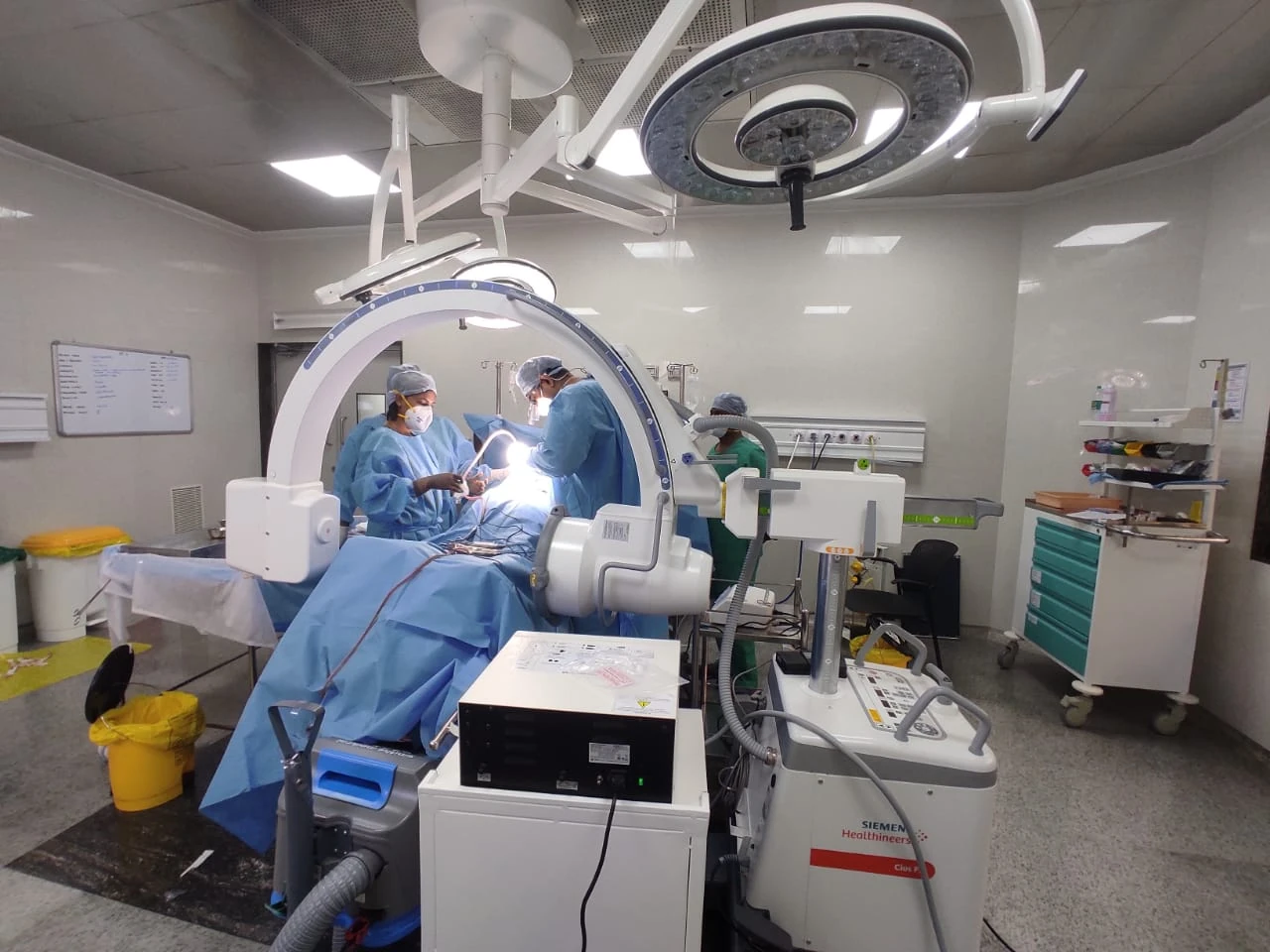
Dr. Vidhyadharan Sivakumar is a fellowship-trained head and neck surgical oncologist who led India's first Transoral Robotic Surgery (TORS) assisted Total Laryngectomy in 2022. With over 20 years of experience and training across 8 countries, he specializes in voice-preserving approaches for throat cancer treatment.

As Clinical Director at THANC Hospital Chennai, Dr. Vidhyadharan offers comprehensive throat cancer care using advanced techniques including TORS, laser surgery, and organ-preservation protocols. His expertise spans laryngeal (voice box), hypopharyngeal (lower throat), and oropharyngeal (middle throat) cancers, with focus on maintaining voice, swallowing, and quality of life.

Credentials & Expertise

India's First TORS Total Laryngectomy (2022) | MCh Head & Neck Surgery (Gold Medal) | World's First Endo-Robotic Surgery Team Member (2023) | Rising Star Award in Onco-Phagosurgery

Throat Cancer Conditions Treated

Laryngeal Cancer (Voice Box Cancer)
Glottic Cancer (Vocal Cord Cancer)
Supraglottic Cancer
Subglottic Cancer
Hypopharyngeal Cancer
Oropharyngeal Cancer
Tonsil Cancer
Base of Tongue Cancer
Posterior Pharyngeal Wall Cancer
Pyriform Sinus Cancer
Post-Cricoid Cancer
Recurrent Throat Cancer

Warning Signs of Throat Cancer

Consult Dr. Vidhyadharan if you experience:

Hoarseness or voice change lasting more than 3 weeks
Persistent sore throat
Difficulty or pain when swallowing
Feeling of lump in throat
Ear pain (referred pain)
Unexplained weight loss
Coughing up blood
Breathing difficulty or noisy breathing
Neck lump or swelling
Bad breath (halitosis)
Difficulty breathing
Voice fatigue

Early diagnosis improves outcomes

Treatments

Dr. Vidhyadharan's Throat Cancer Treatment Approaches

Transoral Robotic Surgery (TORS)

Pioneering minimally invasive robotic surgery for throat cancers, accessing tumors through the mouth without external incisions. Dr. Vidhyadharan performed India's first TORS-assisted laryngectomy. Offers faster recovery, preserved swallowing, and reduced need for tracheostomy.

Transoral Laser Microsurgery (TLM)

Precision laser surgery for early glottic (vocal cord) cancers. Preserves voice while completely removing cancer. Outpatient or short hospital stay. Excellent cure rates for T1-T2 laryngeal cancers with voice preservation.

Organ Preservation Protocols

For selected patients, chemoradiation can cure throat cancer while preserving the larynx. Dr. Vidhyadharan helps select appropriate candidates and provides salvage surgery for those who don't respond. Balances cure with quality of life.

Total Laryngectomy with Voice Rehabilitation

When larynx removal is necessary for cure, Dr. Vidhyadharan performs comprehensive surgery with tracheoesophageal puncture for voice restoration. Patients speak using prosthetic valve. Excellent functional outcomes and cancer control.

Why Choose

Why Choose Dr. Vidhyadharan for Throat Cancer

Pioneer of India's First TORS-assisted Total Laryngectomy (2022)

Member of World's First Endo-Robotic Surgery team (2023)

MCh in Head & Neck Surgery with Gold Medal

Fellowship training in robotic surgery from Royal Adelaide Hospital, Australia

Over 3000 head and neck surgeries performed

Expertise in voice-preserving cancer surgery

Comprehensive voice rehabilitation program

Multidisciplinary tumor board approach

Advanced Technology & Techniques

da Vinci Robotic Surgical SystemCO2 Laser MicrosurgeryNarrow Band Imaging EndoscopyTracheoesophageal Voice ProsthesisIntraoperative Nerve MonitoringHigh-Definition Videolaryngoscopy
Your Journey

Your Throat Cancer Treatment Journey

Understanding what to expect helps reduce anxiety and prepares you for treatment

1

Comprehensive Evaluation

Detailed videolaryngoscopy examination, biopsy under anesthesia if needed, and staging with CT/MRI/PET scans. Assessment of voice and swallowing function. Multidisciplinary tumor board discussion.

2

Treatment Planning

Personalized treatment plan considering tumor stage, location, patient health, and preferences. Discussion of voice preservation options, surgical approaches (TORS, laser, open), and expected outcomes.

3

Surgical Treatment

Precise tumor removal using the optimal technique for each case. TORS or laser for suitable tumors. Comprehensive surgery with reconstruction for advanced cases. Same-stage voice restoration when appropriate.

4

Post-Operative Care

Specialized airway management and monitoring. Early swallowing assessment and therapy. Voice therapy initiation. Planning for adjuvant radiation/chemotherapy if needed.

5

Voice & Swallowing Rehabilitation

Comprehensive rehabilitation with speech therapists. Tracheoesophageal voice training for laryngectomy patients. Swallowing therapy and dietary guidance. Regular follow-up for recurrence surveillance.

FAQs

Frequently Asked Questions

Yes, many throat cancers can be cured with voice preservation. Early laryngeal cancers are highly curable with laser surgery or radiation while keeping your natural voice. Dr. Vidhyadharan's expertise in TORS and laser surgery maximizes voice preservation. Even when larynx removal is necessary, voice restoration with prosthesis enables speech.

Survival depends on cancer type, stage, and treatment. Early glottic (vocal cord) cancer: 90%+ five-year survival. Early supraglottic cancer: 80%+ survival. Advanced throat cancer: 50-70% depending on specific factors. Dr. Vidhyadharan's advanced techniques and multidisciplinary approach optimize outcomes at every stage.

Not necessarily. Most throat cancer surgeries today avoid permanent tracheostomy. TORS and laser surgery rarely need any tracheostomy. Partial laryngectomy may need temporary tracheostomy. Only total laryngectomy (removal of voice box) requires permanent stoma, but this is for advanced cancers where it's necessary for cure.

Transoral Robotic Surgery (TORS) uses the da Vinci robot to remove throat tumors through the mouth with no external incisions. Benefits include: no visible scars, faster recovery (hospital stay 3-4 days), better swallowing outcomes, reduced need for tracheostomy, and often avoids need for radiation. Dr. Vidhyadharan pioneered TORS applications in India.

Yes! Modern voice rehabilitation enables speaking after larynx removal. Dr. Vidhyadharan performs tracheoesophageal puncture (TEP) and places a voice prosthesis, allowing you to speak by redirecting air through the prosthesis. Most patients develop good, understandable speech. Alternative methods include electrolarynx and esophageal speech.

Smoking is the primary cause of laryngeal (voice box) cancer. Alcohol amplifies the risk. However, oropharyngeal cancers (tonsil, base of tongue) are increasingly caused by HPV infection, even in non-smokers. Dr. Vidhyadharan treats both smoking-related and HPV-related throat cancers with appropriate strategies for each.

Recovery varies by procedure. Laser surgery for early cancer: 1-2 weeks, often outpatient. TORS: 3-5 days hospital stay, 2-3 weeks recovery. Partial laryngectomy: 1-2 weeks hospital, 4-6 weeks recovery. Total laryngectomy: 2-3 weeks hospital, 2-3 months for full rehabilitation including voice training.

It depends on the pathology findings. Early cancers with clear margins often need surgery alone. Advanced cancers, close/positive margins, lymph node involvement, or high-risk features usually require post-operative radiation with or without chemotherapy. The tumor board recommends the optimal adjuvant treatment plan.

Yes, recurrent throat cancer can often be treated successfully. Options depend on previous treatment. After radiation: salvage surgery including laryngectomy. After surgery: re-resection if feasible, or radiation. Dr. Vidhyadharan has expertise in salvage surgery, including complex reconstruction for previously treated cases.

Cost varies based on cancer stage, type of surgery (TORS, laser, or open), reconstruction needs, and adjuvant treatment requirements. THANC Hospital offers comprehensive throat cancer care with transparent pricing. Insurance coverage is available for cancer treatment. Detailed estimates provided after staging workup.

Throat cancer (laryngeal, pharyngeal) arises from the lining of the voice box or throat and is primarily linked to smoking/alcohol/HPV. Thyroid cancer arises from the thyroid gland in the neck and has different causes and behavior. Dr. Vidhyadharan treats both types with specialized approaches for each.

Yes, throat cancer can spread to neck lymph nodes (most common) and rarely to lungs, liver, or bones. Early detection and treatment prevents spread. Neck dissection removes involved lymph nodes. Advanced imaging (PET-CT) helps detect spread. Dr. Vidhyadharan's comprehensive approach addresses both primary tumor and potential spread.

Have more questions? We're here to help.

Schedule a Consultation

Voice-Preserving Throat Cancer Care - Consult Dr. Vidhyadharan

India's pioneer in robotic throat cancer surgery. Schedule your consultation at THANC Hospital for expert evaluation and personalized treatment options