Laryngeal Cancer Treatment: Can You Keep Your Voice? (2026 Guide)
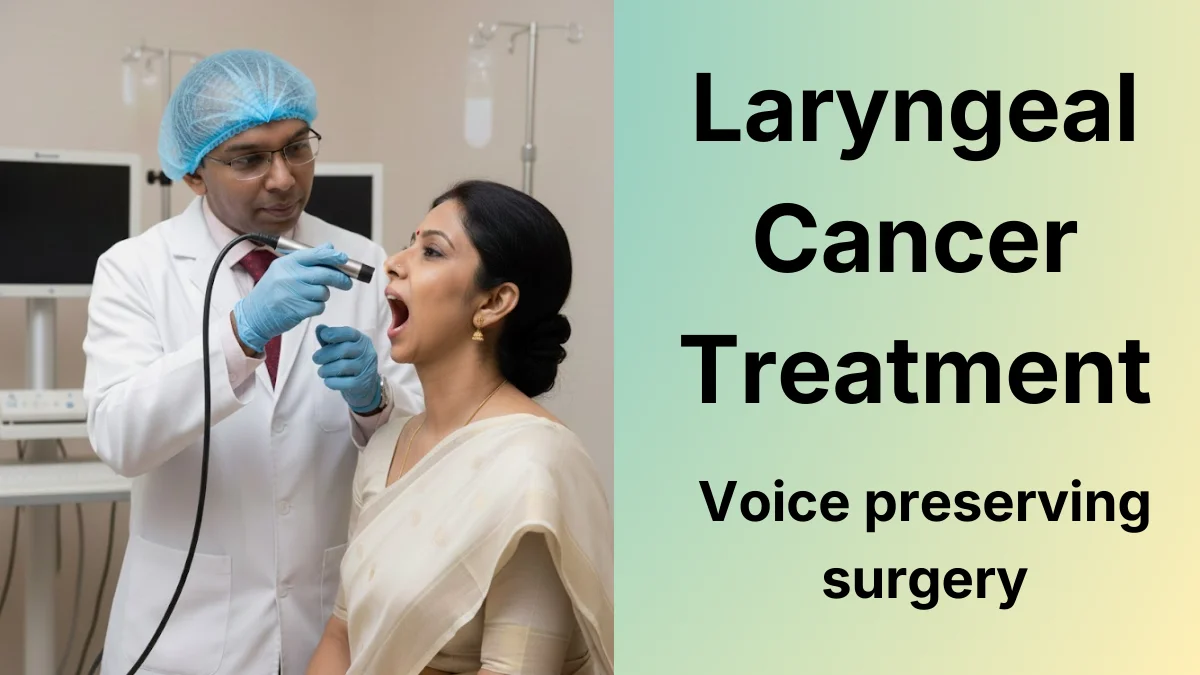
Need expert consultation? Book an appointment with Dr. Vidhyadharan at THANC Hospital.
Book AppointmentLaryngeal cancer, a type of throat cancer, can significantly impact a person's life, particularly their ability to speak. Fortunately, advancements in medical technology have made voice-preserving laryngeal cancer treatment a reality. At THANC Hospital, Kilpauk, Chennai, Dr. Vidhyadharan Sivakumar, India's TORS pioneer who performed the country's first TORS-assisted Total Laryngectomy, offers state-of-the-art treatment options to help patients maintain their voice while effectively battling cancer.
Understanding Laryngeal Cancer
The larynx, commonly known as the voice box, is located in the neck and plays a vital role in speech, breathing, and swallowing. Laryngeal cancer occurs when malignant cells form in the tissues of the larynx.
Risk Factors and Prevention
Several factors can increase the risk of developing laryngeal cancer, including:
- Smoking: Tobacco use is the leading cause of laryngeal cancer.
- Excessive Alcohol Consumption: Heavy drinking, especially when combined with smoking, significantly elevates the risk.
- Human Papillomavirus (HPV): Certain strains of HPV are linked to laryngeal cancer.
- Exposure to Certain Chemicals: Occupational exposure to substances like asbestos and sulfuric acid can contribute to the risk.
- Poor Nutrition: A diet lacking in fruits and vegetables may increase susceptibility.
Preventive measures include quitting smoking, limiting alcohol consumption, getting vaccinated against HPV, and maintaining a healthy diet.
Symptoms and Diagnosis
Early detection is crucial for successful laryngeal cancer treatment. Common symptoms include:
- Persistent hoarseness or changes in voice
- A lump in the neck
- Sore throat or persistent cough
- Difficulty swallowing (dysphagia)
- Ear pain
- Unexplained weight loss
If you experience any of these symptoms for more than a few weeks, it's essential to consult a medical professional for a thorough evaluation. Diagnosis typically involves a physical exam, laryngoscopy (a procedure to examine the larynx with a scope), and biopsy to confirm the presence of cancer cells. Imaging tests like CT scans and MRIs help determine the extent of the cancer.
Voice-Preserving Laryngeal Cancer Treatment Options
The primary goal of laryngeal cancer treatment is to eradicate the cancer while preserving as much of the larynx's function as possible, particularly the ability to speak. Several voice-preserving treatment options are available, depending on the stage and location of the cancer.
Transoral Robotic Surgery (TORS)
Transoral Robotic Surgery (TORS) is a minimally invasive surgical technique that utilizes the da Vinci robotic system to remove tumors from the larynx through the mouth. This approach offers several advantages over traditional open surgery:
- Precise Tumor Removal: The robotic system provides enhanced visualization and dexterity, allowing surgeons to precisely target and remove the tumor while minimizing damage to surrounding healthy tissue.
- Reduced Blood Loss: TORS typically results in less blood loss compared to open surgery.
- Shorter Hospital Stay: Patients undergoing TORS often experience shorter hospital stays and a faster recovery.
- Improved Voice Outcomes: By preserving more of the larynx's natural structure and function, TORS can lead to better voice outcomes.
Dr. Vidhyadharan Sivakumar is a highly skilled and experienced surgeon in TORS, having performed numerous successful procedures. In fact, Dr. Vidhyadharan performed India's First TORS-assisted Total Laryngectomy in 2022.
Laser Microsurgery
Laser microsurgery involves using a laser to precisely cut and remove cancerous tissue from the larynx. This technique is often used for early-stage laryngeal cancers. Like TORS, laser microsurgery offers the advantage of being minimally invasive, resulting in less scarring and a quicker recovery.
Partial Laryngectomy
In some cases, a partial laryngectomy may be necessary to remove a portion of the larynx affected by cancer. Surgeons carefully preserve as much of the remaining larynx as possible to maintain voice function.
Radiation Therapy
Radiation therapy uses high-energy rays to kill cancer cells. It can be used as a primary treatment for early-stage laryngeal cancer or in combination with surgery for more advanced cases. Advances in radiation therapy techniques, such as intensity-modulated radiation therapy (IMRT), allow for more precise targeting of cancer cells while minimizing damage to surrounding healthy tissues.
Chemotherapy
Chemotherapy involves using drugs to kill cancer cells throughout the body. It is often used in combination with radiation therapy for advanced laryngeal cancer.
If you're experiencing persistent hoarseness, difficulty swallowing, or a lump in the neck, early consultation is crucial. Book an appointment with Dr. Vidhyadharan at THANC Hospital, Chennai, or call +91 73059 53378.
Dr. Vidhyadharan Sivakumar: A Leader in Voice-Preserving Laryngeal Cancer Treatment
Dr. Vidhyadharan Sivakumar is an internationally trained Head & Neck Surgical Oncologist based in Chennai, India, and serves as the Clinical Director & Senior Consultant at THANC Hospital (The Head and Neck Centre & Hospital). His expertise in voice-preserving laryngeal cancer treatment, particularly TORS, has made him a sought-after specialist for patients from across Chennai and Tamil Nadu.
Qualifications and Achievements
Dr. Vidhyadharan's impressive qualifications and achievements include:
- MCh (Head & Neck Surgery) - Amrita Institute
- MS (Otorhinolaryngology) - Gold Medal, First Mark - Annamalai University (2009)
- ASOHNS Clinical Fellowship - Royal Adelaide Hospital, Australia (2016-17)
- Fellow, European Board of Otorhinolaryngology (FEB-ORL HNS, 2018)
- Fellow, Indian College of Robotic Surgeons (FICRS)
- Co-Editor of "Comprehensive Management of Head and Neck Cancer" (Jaypee Brothers, 2021)
- 40+ peer-reviewed publications including The Laryngoscope
- 15+ years specialist practice | 3000+ complex surgeries
- India's First TORS-assisted Total Laryngectomy (2022)
- World's First Endo-Robotic Surgery Team (2023)
- Tamil Nadu's first laryngeal reinnervation
- Trained across 8 countries (Australia, Taiwan, Singapore, Korea, Canada, etc.)
A Patient-Centric Approach
Dr. Vidhyadharan is committed to providing personalized care to each patient. He takes the time to thoroughly evaluate each case, discuss treatment options, and answer any questions or concerns. His compassionate and patient-centric approach ensures that patients feel comfortable and confident throughout their treatment journey.
THANC Hospital: A Center of Excellence for Head and Neck Cancer Care
THANC Hospital (The Head and Neck Centre & Hospital) in Kilpauk, Chennai, is a specialized center for head and neck cancer care. The hospital boasts state-of-the-art facilities, advanced technology, and a multidisciplinary team of experts dedicated to providing comprehensive and cutting-edge treatments.
Specialized Services
THANC Hospital offers a wide range of specialized services for laryngeal cancer patients, including:
- Advanced diagnostic imaging
- Transoral Robotic Surgery (TORS)
- Laser microsurgery
- Partial laryngectomy
- Radiation therapy
- Chemotherapy
- Voice rehabilitation
- Swallowing therapy
- Nutritional support
A Multidisciplinary Team
The hospital's multidisciplinary team includes surgeons, radiation oncologists, medical oncologists, speech therapists, swallowing therapists, nutritionists, and other healthcare professionals who work together to develop individualized treatment plans for each patient.
The Importance of Voice Rehabilitation
Voice rehabilitation is an essential part of the recovery process after laryngeal cancer treatment, especially for patients who have undergone surgery or radiation therapy.
Speech Therapy
Speech therapists work with patients to improve their voice quality, strength, and clarity. They provide exercises and techniques to help patients regain control over their vocal cords and improve their ability to speak.
Swallowing Therapy
Difficulty swallowing (dysphagia) is a common side effect of laryngeal cancer treatment. Swallowing therapists help patients regain their ability to swallow safely and effectively. They provide exercises and strategies to strengthen the muscles involved in swallowing and prevent aspiration (food or liquid entering the lungs).
Comparing Treatment Options for Laryngeal Cancer
Choosing the right treatment option for laryngeal cancer depends on various factors, including the stage and location of the cancer, the patient's overall health, and their personal preferences. Here's a comparison of common treatment options:
| Treatment Option | Description | Advantages | Disadvantages |
|---|---|---|---|
| TORS | Minimally invasive robotic surgery to remove tumors through the mouth. | Precise tumor removal, reduced blood loss, shorter hospital stay, improved voice outcomes. | May not be suitable for all tumor locations or advanced stages. |
| Laser Microsurgery | Uses a laser to precisely cut and remove cancerous tissue. | Minimally invasive, less scarring, quicker recovery. | Limited to early-stage cancers. |
| Partial Laryngectomy | Surgical removal of a portion of the larynx. | Can preserve some voice function. | May result in changes in voice quality. |
| Radiation Therapy | Uses high-energy rays to kill cancer cells. | Can be used as a primary treatment or in combination with surgery. | Side effects may include sore throat, dry mouth, and fatigue. |
| Chemotherapy | Uses drugs to kill cancer cells throughout the body. | Used in combination with radiation therapy for advanced cancer. | Side effects may include nausea, vomiting, hair loss, and fatigue. |
It is important to note that the success rates of laryngeal cancer treatment depend heavily on the stage at which the cancer is diagnosed. Early detection and prompt treatment significantly improve the chances of a positive outcome. According to the National Cancer Institute, the 5-year survival rate for localized laryngeal cancer is approximately 83%. This emphasizes the importance of regular check-ups and seeking medical attention for any persistent symptoms.
Have questions about your condition? Schedule a consultation with Dr. Vidhyadharan at THANC Hospital, Kilpauk, Chennai.
The Future of Laryngeal Cancer Treatment
The field of laryngeal cancer treatment is constantly evolving, with ongoing research and development leading to new and improved therapies. Some promising areas of research include:
- Immunotherapy: Using the body's own immune system to fight cancer.
- Targeted Therapy: Using drugs that specifically target cancer cells while sparing healthy cells.
- Gene Therapy: Modifying genes to prevent or treat cancer.
As medical knowledge and technology continue to advance, the future of laryngeal cancer treatment looks increasingly bright.
Conclusion
Laryngeal cancer can be a challenging diagnosis, but with early detection and appropriate treatment, patients can achieve excellent outcomes and maintain their quality of life. Dr. Vidhyadharan Sivakumar at THANC Hospital in Chennai is dedicated to providing state-of-the-art voice-preserving laryngeal cancer treatment and personalized care to help patients overcome this disease.
For personalized treatment options and expert care, consult Dr. Vidhyadharan Sivakumar at THANC Hospital, Kilpauk, Chennai. Call +91 73059 53378 or request an appointment online.
Related Reading
- Understanding Throat Cancer Symptoms
- Voice Problems: When to See a Specialist
- Robotic Surgery (TORS) Explained
References
- National Cancer Institute. "Laryngeal Cancer Treatment (PDQ®)–Patient Version." https://www.cancer.gov/types/head-and-neck/patient/laryngeal-treatment-pdq
- American Cancer Society. "Laryngeal and Hypopharyngeal Cancer." https://www.cancer.org/cancer/laryngeal-and-hypopharyngeal-cancer.html
- NCCN Guidelines. "Head and Neck Cancers." National Comprehensive Cancer Network.
- O'Malley, B. W., Jr., Weinstein, G. S., & Rassekh, C. H. (2006). Transoral robotic surgery: a new approach to resection of head and neck tumors. Archives of Otolaryngology–Head & Neck Surgery, 132(12), 1329-1332.
- Weinstein, G. S., O'Malley, B. W., Jr., Snyder, W., Sherman, E., Quon, H., & El-Mofty, S. (2010). Transoral robotic surgery (TORS) for advanced oropharyngeal carcinoma. Archives of Otolaryngology–Head & Neck Surgery, 136(12), 1269-1276.
- World Health Organization, International Agency for Research on Cancer. https://www.iarc.fr/
- Laryngoscope. Peer reviewed journal. https://onlinelibrary.wiley.com/journal/15314995

Authored by
Dr. Vidhyadharan Sivakumar
MCh (Head & Neck Surgery), FEB-ORL HNS, MS (ENT) Gold Medal
Clinical Director & Senior Consultant at THANC Hospital, Chennai. Co-Editor of "Comprehensive Management of Head and Neck Cancer" (2021) with 40+ publications. Team Leader for India's first TORS-assisted Total Laryngectomy (2022). 15+ years experience with over 3000 complex surgeries.