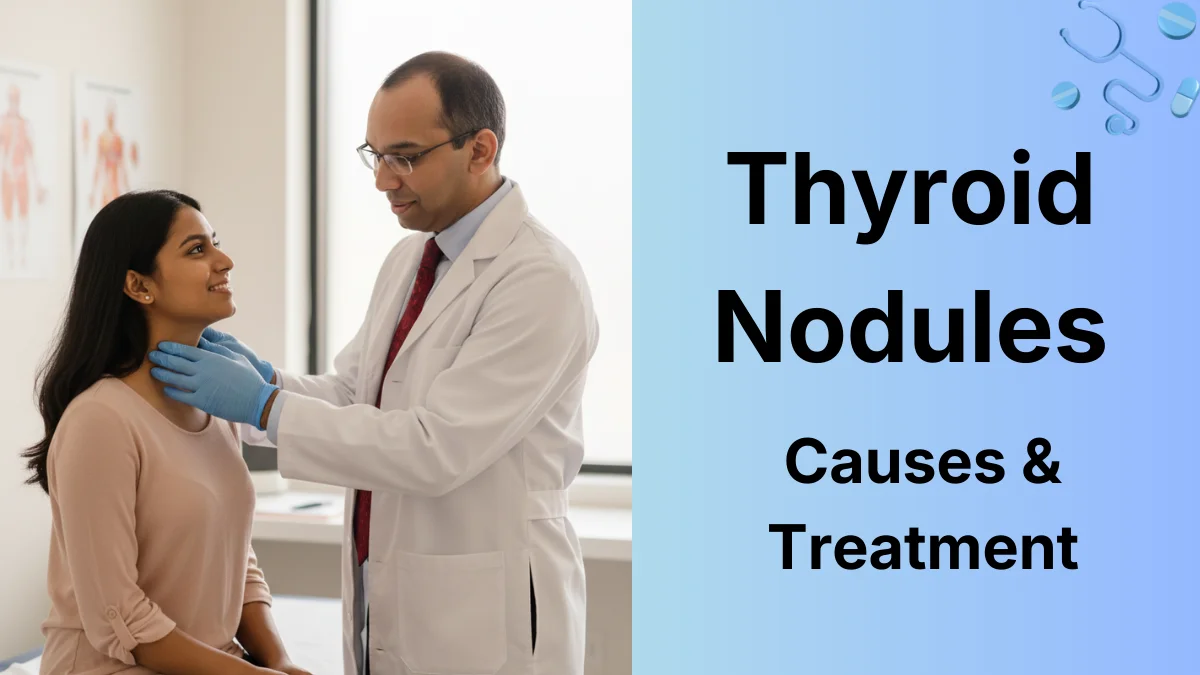
Thyroid nodules are among the most common endocrine findings in clinical practice, detected in up to 50-60% of the adult population on high-resolution ultrasound. While the term "thyroid nodule" often causes significant anxiety, the overwhelming majority, approximately 90-95%, are benign and require only periodic monitoring. The clinical challenge lies in systematically identifying the 5-10% that harbour malignancy while avoiding unnecessary surgery for the many harmless nodules. At THANC Hospital in Chennai, Dr. Vidhyadharan Sivakumar performs systematic, FNAC-guided thyroid nodule evaluation and management, drawing on his Gold Medal in MS (ENT), MCh in Head & Neck Surgery, FEB-ORL HNS (European Board certification), FICRS, and over 3000 head and neck surgeries to ensure that every patient receives precisely the right level of intervention, whether that is reassurance and monitoring or definitive surgical treatment.
Understanding Thyroid Nodules
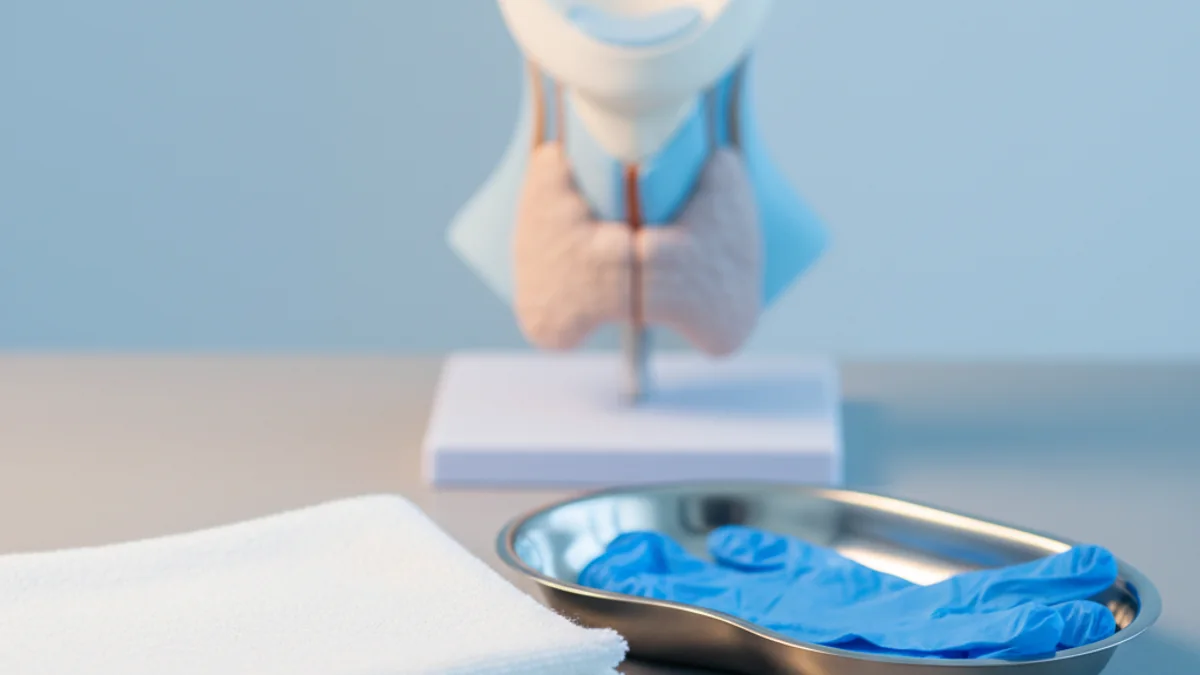
The thyroid gland is a butterfly-shaped endocrine organ in the front of the neck that produces hormones regulating metabolism, heart rate, and body temperature. Thyroid nodules are discrete lumps or growths within the gland, ranging from a few millimetres to several centimetres. They may be solid, cystic (fluid-filled), or mixed, and can occur as solitary nodules or multiple nodules (multinodular goitre).
In India, thyroid nodules are particularly prevalent, palpable nodules are found in 4-7% of the general population, while ultrasound-detected nodules are present in more than half of adults over 50. Chennai sees a high volume of referrals from across Tamil Nadu, Andhra Pradesh, Karnataka, and Kerala. The widespread use of high-resolution ultrasound and cross-sectional imaging has led to growing numbers of incidentally detected "thyroid incidentalomas."
The key statistic: approximately 95% of thyroid nodules are benign. For every 20 patients with a thyroid nodule, only 1 is likely to have cancer. The diagnostic pathway is designed to identify that 1 patient efficiently while sparing the other 19 from unnecessary procedures. For comprehensive information, our guide on thyroid nodule causes, symptoms, and treatment provides an in-depth overview.
Types and Classification
Thyroid nodules arise from various underlying conditions, each with different clinical implications:
Colloid nodules are the most common type, entirely benign overgrowths of normal thyroid tissue, often multiple (forming multinodular goitre), that may fluctuate in size and undergo cystic degeneration.
Follicular adenoma is the most common benign thyroid neoplasm. On FNAC, it cannot be distinguished from follicular carcinoma, a distinction requiring surgical excision.
Thyroid cysts include pure cysts (almost always benign) and complex cystic-solid nodules (higher malignancy risk requiring evaluation of the solid component).
Hashimoto's thyroiditis can produce nodular enlargement, is the most common cause of hypothyroidism in India, and carries a slightly increased risk of papillary thyroid cancer.
Toxic adenoma and toxic multinodular goitre are autonomously functioning nodules causing hyperthyroidism, managed with radioactive iodine, antithyroid medications, or surgery.
Thyroid cancer accounts for 5-10% of nodules, papillary (80-85%), follicular (10-15%), medullary (3-5%), and anaplastic (<2%).
Causes and Risk Factors
Understanding risk factors helps stratify which nodules warrant closer attention:
| Risk Factor | Increases Nodule Risk | Increases Cancer Risk |
|---|---|---|
| Female gender | Yes (4:1 female predominance) | Yes (3:1 ratio) |
| Age over 40 years | Yes | Yes (though thyroid cancer can affect younger patients) |
| Iodine deficiency | Yes (goitre, multinodular disease) | Modest increase (particularly follicular type) |
| Prior head/neck radiation | Yes | Yes (significant, especially childhood exposure) |
| Family history of thyroid cancer | Modest increase | Yes (5-10 fold for first-degree relatives) |
| Hashimoto's thyroiditis | Yes | Slight increase (papillary type) |
| Obesity/metabolic syndrome | Emerging evidence | Emerging evidence |
| Pregnancy | May enlarge existing nodules | Does not increase cancer risk |
| Male sex with solitary nodule | Not specifically | Higher proportion malignant than in females |
| Childhood/adolescent age | Less common | Higher proportion malignant than in adults |
Certain features of the nodule itself increase cancer suspicion: rapid growth, firmness on palpation, fixation to surrounding structures, associated hoarseness, and concurrent cervical lymph node enlargement. These features should prompt urgent specialist evaluation.
Signs and Symptoms
Most thyroid nodules are asymptomatic and discovered incidentally:
- Incidental detection: The most common scenario, a nodule found during physical examination or on imaging performed for unrelated reasons.
- Visible neck swelling: Larger nodules may produce a visible lump.
- Throat pressure or fullness: A pressing sensation, often noticed when swallowing.
- Dysphagia: Difficulty swallowing when a large nodule compresses the oesophagus.
- Dyspnoea: Breathing difficulty, especially lying flat, if a goitre displaces the trachea.
- Hoarseness: Suggests possible nerve involvement and raises concern for malignancy, warrants urgent evaluation.
- Hyperthyroidism symptoms: Weight loss, tremor, palpitations if the nodule is a toxic adenoma.
Any nodule associated with hoarseness, rapid growth, cervical lymph node enlargement, or a history of radiation should be evaluated urgently.
Diagnosis at THANC Hospital
Dr. Vidhyadharan employs a systematic, evidence-based diagnostic pathway at THANC Hospital that adheres to international guidelines (ATA 2015, ACR TI-RADS) while being tailored to the Indian clinical context.
Clinical Assessment
The initial evaluation includes detailed history (symptoms, radiation exposure, family history), palpation of the thyroid and cervical lymph nodes, assessment for compressive symptoms, and flexible laryngoscopy to assess vocal cord function.
High-Resolution Neck Ultrasound
Ultrasound is the most important imaging modality. Dr. Vidhyadharan assesses nodule composition, echogenicity, shape (taller-than-wide is concerning), margins, and echogenic foci (microcalcifications are suspicious; comet-tail artifacts are benign). Cervical lymph nodes are systematically evaluated. These features are scored using the ACR TI-RADS system.
ACR TI-RADS Classification
| TI-RADS Category | Risk Level | Characteristics | FNAC Threshold |
|---|---|---|---|
| TI-RADS 1 (TR1) | Benign | Simple cyst, normal thyroid | No FNAC needed |
| TI-RADS 2 (TR2) | Not suspicious | Spongiform, partially cystic with comet-tail artifacts | No FNAC needed |
| TI-RADS 3 (TR3) | Mildly suspicious | Partially cystic, isoechoic, no suspicious features | FNAC if >= 2.5 cm |
| TI-RADS 4 (TR4) | Moderately suspicious | Solid hypoechoic with 1 suspicious feature | FNAC if >= 1.5 cm |
| TI-RADS 5 (TR5) | Highly suspicious | Solid hypoechoic with 2+ suspicious features | FNAC if >= 1 cm |
This standardised approach prevents unnecessary biopsies of clearly benign nodules while ensuring that suspicious nodules are investigated promptly. Dr. Vidhyadharan's Gold Medal in MS (ENT) from Annamalai University reflects the deep understanding of head and neck anatomy and pathology that underpins his systematic approach to thyroid nodule diagnosis.
Fine Needle Aspiration Cytology (FNAC)
FNAC is the gold standard diagnostic test. At THANC Hospital, FNAC is performed under real-time ultrasound guidance using a 23-25 gauge needle, takes 5-10 minutes in the outpatient clinic without sedation, and causes minimal discomfort. Results are reported using the Bethesda System:
| Bethesda Category | Interpretation | Risk of Malignancy | Recommended Action |
|---|---|---|---|
| I, Non-diagnostic | Insufficient cells | 5-10% | Repeat FNAC in 4-6 weeks |
| II, Benign | Colloid nodule, thyroiditis | 0-3% | Ultrasound follow-up in 12-24 months |
| III, AUS/FLUS | Indeterminate | 10-30% | Repeat FNAC, molecular testing, or lobectomy |
| IV, Follicular Neoplasm | Cannot distinguish adenoma from carcinoma | 25-40% | Diagnostic lobectomy |
| V, Suspicious for Malignancy | Likely cancer | 50-75% | Lobectomy or total thyroidectomy |
| VI, Malignant | Confirmed cancer | 97-99% | Thyroidectomy based on cancer type |
Molecular Testing for Indeterminate Nodules
For Bethesda III and IV nodules, molecular testing can refine the cancer risk estimate. ThyroSeq v3 (next-generation sequencing panel) and Afirma Gene Sequencing Classifier (mRNA expression analysis) can classify indeterminate nodules as benign or suspicious. A benign molecular result reduces cancer risk to approximately 3-4%, potentially avoiding unnecessary diagnostic surgery. Dr. Vidhyadharan integrates molecular testing results when patients have access to these tests.
How Dr. Vidhyadharan Treats Thyroid Nodules
At THANC Hospital, Dr. Vidhyadharan's approach to thyroid nodule management is guided by the principle that the right intervention at the right time produces the best outcomes, and that avoiding unnecessary surgery is just as important as performing necessary surgery well. His FEB-ORL HNS European Board certification and MCh in Head & Neck Surgery ensure that management decisions are grounded in evidence-based practice.
Conservative Management: When Surgery Is NOT Needed
The majority of thyroid nodules are managed conservatively, and Dr. Vidhyadharan actively counsels against unnecessary surgery:
Benign nodules (Bethesda II): Serial ultrasound at 12-24 months, then every 2-3 years if stable. Repeat FNAC only if significant growth (>20% in two dimensions or >50% volume increase).
Small, low-suspicion nodules below FNAC thresholds: Periodic ultrasound surveillance without biopsy per ACR TI-RADS guidelines.
Incidental thyroid nodules under 1 cm: Observed without FNAC in the absence of suspicious features or clinical risk factors.
Symptomatic cysts: Aspiration may relieve symptoms; recurrent cysts may require surgery or ethanol ablation.
Surgical Treatment: When Surgery IS Needed
Surgery is recommended for specific indications:
- Malignant cytology (Bethesda VI): Confirmed thyroid cancer requires surgical treatment, the extent (lobectomy vs. total thyroidectomy) depends on the cancer type, size, and risk features.
- Suspicious cytology (Bethesda V): Surgery recommended given the 50-75% malignancy risk.
- Indeterminate cytology (Bethesda III/IV): Diagnostic lobectomy when molecular testing is unavailable, inconclusive, or suspicious.
- Compressive symptoms: Large nodules causing difficulty swallowing, breathing difficulty, or choking sensation warrant removal regardless of cytology.
- Cosmetic concern: Visibly prominent goitres causing self-consciousness.
- Toxic nodule/toxic multinodular goitre: When hyperthyroidism from autonomous nodules is not controlled with medication or radioactive iodine.
- Significant growth on surveillance: Prompts re-evaluation with FNAC and consideration of surgery.
Surgical Options
Thyroid lobectomy (hemithyroidectomy) removes one thyroid lobe and isthmus. Indicated for diagnostic surgery (Bethesda III/IV), low-risk thyroid cancer, benign nodules causing unilateral symptoms, and toxic adenoma.
Total thyroidectomy removes the entire gland. Indicated for bilateral nodular disease requiring surgery, confirmed high-risk thyroid cancer, bilateral compressive multinodular goitre, and Graves' disease refractory to medication.
All thyroid surgeries at THANC Hospital are performed with IONM nerve monitoring and meticulous parathyroid preservation. For comprehensive information about what to expect if cancer is found, our guide on thyroid cancer surgery covers the surgical journey in detail.
What to Expect: Your Treatment Journey
At THANC Hospital, the thyroid nodule evaluation pathway is designed for efficiency and patient comfort.
Initial consultation includes clinical assessment, review of investigations, and neck ultrasound. If FNAC is indicated by TI-RADS criteria, it is often performed during the same visit. Dr. Vidhyadharan explains findings and the recommended management plan clearly.
If observation is recommended: A structured follow-up schedule with specific ultrasound intervals is provided, along with clear instructions about symptoms prompting earlier review.
If FNAC is performed: Results are available within 3-5 working days. A dedicated consultation discusses findings and next steps, surveillance for benign results, surgical options for indeterminate or malignant results.
If surgery is recommended: Preoperative preparation includes laryngoscopy, blood work, and anaesthesia assessment. Surgery through a cosmetic collar incision with IONM monitoring. Hospital stay is 1 day (lobectomy) to 1-2 days (total thyroidectomy). Final histopathology in 7-10 days.
Recovery and Rehabilitation
Recovery after thyroid nodule surgery is generally straightforward and predictable.
After lobectomy: Discharge on postoperative day 1. Return to sedentary work within 1-2 weeks. Thyroid function tested at 6-8 weeks, approximately 50-80% maintain normal function with the remaining lobe.
After total thyroidectomy: Discharge day 1-2. Calcium monitored for 24-48 hours. Lifelong levothyroxine required, dose adjusted at 6-8 week intervals. Temporary hypoparathyroidism (5-15%) managed with calcium and vitamin D supplementation.
Wound care: The cosmetic collar incision matures over 6-12 months to a typically inconspicuous line.
Voice preservation: IONM ensures recurrent laryngeal nerve preservation. Uncommon postoperative voice changes are assessed with laryngoscopy and managed with speech therapy.
Long-term follow-up: Benign nodules require thyroid function monitoring. If cancer is found, a tailored surveillance plan includes neck ultrasound, thyroglobulin monitoring, and appropriate follow-up intervals.
Outcomes and Prognosis
The outcomes for thyroid nodule management are overwhelmingly positive:
- Benign nodules (95% of all nodules): Excellent long-term outcomes with surveillance. Most benign nodules remain stable or grow only minimally over years. The risk of a nodule initially classified as benign on FNAC later proving to be cancer is approximately 1-3%, a very low false-negative rate.
- Indeterminate nodules (Bethesda III/IV): Approximately 60-75% prove benign on final surgical pathology. For the 25-40% that prove malignant, they are almost always early-stage, highly curable thyroid cancers discovered at an optimal point for treatment.
- Malignant nodules: When thyroid cancer is identified, surgical treatment provides excellent outcomes, papillary thyroid cancer has 10-year survival exceeding 98%, and even follicular thyroid cancer has 10-year survival exceeding 85% with appropriate treatment.
- Surgical safety: With IONM nerve monitoring, the risk of permanent recurrent laryngeal nerve injury is less than 1%, and the risk of permanent hypoparathyroidism after total thyroidectomy is less than 1-2% in experienced hands.
The key message is that systematic, evidence-based thyroid nodule evaluation achieves the dual goals of identifying cancer early when it is most treatable and avoiding unnecessary surgery for the majority of patients whose nodules are benign.
Why Choose Dr. Vidhyadharan at THANC Hospital
Thyroid nodule management requires a clinician who excels at both diagnosis and surgery, who knows when to operate and when not to. Dr. Vidhyadharan Sivakumar brings:
- Gold Medal in MS (ENT) from Annamalai University: foundational excellence in clinical assessment and diagnostic skill, the bedrock of accurate nodule evaluation.
- MCh (Head & Neck Surgery) from Amrita Institute: super-speciality training ensuring expertise in thyroid surgery for both benign and malignant disease.
- FEB-ORL HNS (European Board certification): the highest European qualification in head and neck surgery, reflecting rigorous evidence-based training.
- FICRS certification: fellowship at Royal Adelaide Hospital Australia, as part of training across 8 countries including Chang Gung Memorial Hospital Taiwan and Toronto General Hospital Canada.
- FNAC-guided diagnostic expertise: systematic, evidence-based nodule evaluation using ACR TI-RADS and the Bethesda System, ensuring the right patients get biopsied and the right patients are observed.
- Conservative approach for benign nodules: avoiding unnecessary surgery while maintaining structured surveillance.
- Over 3000 head and neck surgeries: when surgery is needed, extensive experience spanning the full spectrum from diagnostic lobectomy to complex thyroidectomy with neck dissection.
- Routine IONM nerve monitoring: standard of care for every thyroid surgery at THANC Hospital.
- Multidisciplinary collaboration with endocrinology, pathology, nuclear medicine, and radiology for comprehensive thyroid nodule care.
For a personalised evaluation of your thyroid nodule, schedule a consultation with Dr. Vidhyadharan Sivakumar at THANC Hospital, Kilpauk, Chennai.
Phone: +91 73059 53378 Location: THANC Hospital, 747 Poonamallee High Road, Kilpauk, Chennai 600010 Book an Appointment