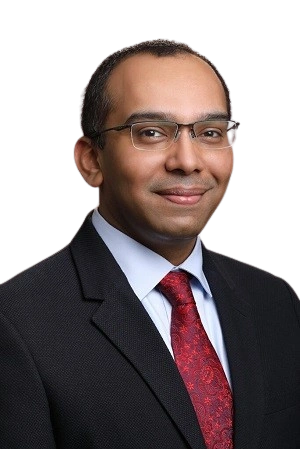
Thyroidectomy is the most commonly performed operation in head and neck surgery worldwide, yet outcomes vary significantly depending on the surgeon's training, technique, and use of technology. At THANC Hospital in Chennai, Dr. Vidhyadharan Sivakumar, MCh (Head & Neck Surgery), FEB-ORL HNS, FICRS, Gold Medal in MS (ENT), performs thyroidectomy with routine Intraoperative Nerve Monitoring (IONM) for every patient, a practice standard at leading international centres that he has brought to his surgical practice after training across 8 countries and performing over 3000 head and neck surgeries. Whether the indication is thyroid cancer, a symptomatic goitre, or Graves' disease, the goal remains the same: complete surgical treatment with meticulous preservation of the recurrent laryngeal nerves and parathyroid glands.
Understanding Thyroidectomy
The thyroid gland is a butterfly-shaped endocrine organ situated in the anterior neck, draped across the trachea just below the larynx. It produces triiodothyronine (T3) and thyroxine (T4), hormones that regulate virtually every metabolic process in the body, from heart rate and body temperature to energy expenditure and mood. Behind the thyroid gland sit four tiny parathyroid glands that control calcium metabolism, and running alongside the gland are the recurrent laryngeal nerves that control vocal cord movement and voice production.
Thyroidectomy, the partial or complete surgical removal of the thyroid gland, has been performed for over a century, but the modern operation bears little resemblance to the high-risk procedures of the early 1900s. Advances in surgical technique, haemostasis technology, and most importantly intraoperative nerve monitoring have transformed thyroidectomy into a safe, well-tolerated procedure with excellent outcomes when performed by a trained specialist.
In India, thyroid disorders are exceptionally common. An estimated 42 million Indians have thyroid disease, and the prevalence of thyroid nodules in the adult population exceeds 10% when detected by ultrasound. Chennai, as a major tertiary healthcare hub serving Tamil Nadu, Andhra Pradesh, Karnataka, and Kerala, sees a large volume of patients requiring thyroidectomy for conditions ranging from multinodular goitre and thyroid cancer to Graves' disease and suspicious nodules. For a broader understanding of thyroid surgery and when it is needed, patients benefit from reviewing the comprehensive information available through Dr. Vidhyadharan's practice.
The decision to recommend thyroidectomy involves careful assessment of the underlying pathology, the extent of disease, the patient's general health, and individual preferences. Dr. Vidhyadharan's approach is to provide patients with evidence-based recommendations while respecting their right to informed decision-making.
Types and Classification
Thyroidectomy is classified by the extent of thyroid tissue removed. The choice depends on the underlying diagnosis, size and location of the pathology, and oncological requirements.
Total Thyroidectomy
Complete removal of both thyroid lobes and the isthmus. This is the most definitive thyroid operation and is indicated when the entire gland is diseased or when completeness of removal is essential for postoperative treatment (such as radioactive iodine therapy for thyroid cancer).
Hemithyroidectomy (Thyroid Lobectomy)
Removal of one thyroid lobe along with the isthmus. This is the operation of choice for unilateral thyroid pathology, a single suspicious nodule, a Bethesda IV follicular neoplasm requiring diagnostic excision, or a low-risk thyroid cancer confined to one lobe.
Subtotal Thyroidectomy
Removal of most of the thyroid gland while leaving a small remnant of tissue, historically performed for Graves' disease and multinodular goitre. This approach has largely fallen out of favour due to higher recurrence rates compared to total thyroidectomy and the difficulty of revision surgery in an already operated field.
Completion Thyroidectomy
Removal of the remaining thyroid lobe after a prior lobectomy, typically performed when final histopathology reveals a cancer that requires total thyroidectomy. This is technically more demanding due to post-surgical scarring and altered anatomy.
| Parameter | Total Thyroidectomy | Hemithyroidectomy | Subtotal Thyroidectomy |
|---|---|---|---|
| Extent | Entire thyroid removed | One lobe + isthmus | Near-total removal, small remnant |
| Primary indications | Bilateral disease, cancer (>4 cm, bilateral, cN1), Graves' disease | Unilateral nodule, low-risk cancer (<4 cm), diagnostic lobectomy | Multinodular goitre (largely historical) |
| Thyroid hormone replacement | Lifelong levothyroxine required | 50-80% maintain normal function | Often still required |
| RAI eligibility | Yes | Not applicable | Not applicable |
| Hypoparathyroidism risk | 1-5% temporary; <1% permanent | Very low (<1%) | 1-3% temporary |
| RLN injury risk (with IONM) | 1-2% temporary; <1% permanent | <1% | 1-2% temporary |
| Hospital stay | 1-2 days | 1 day | 1-2 days |
| Recurrence of disease | Very low | Very low (for appropriate indications) | 5-15% for goitre recurrence |
| Revision surgery feasibility | Not applicable | Completion thyroidectomy feasible | Difficult and higher risk |
Causes and Risk Factors: Indications for Thyroidectomy
Thyroidectomy is recommended across a range of thyroid conditions, each with specific surgical requirements.
Thyroid cancer is the most common indication for thyroidectomy. Papillary and follicular thyroid cancers, medullary thyroid cancer, and anaplastic thyroid cancer all require surgical excision. The extent of thyroidectomy depends on the cancer type, size, and risk stratification based on American Thyroid Association (ATA) guidelines.
Multinodular goitre causing compressive symptoms, dysphagia, dyspnoea, neck pressure, or cosmetic concern, is an indication for total or near-total thyroidectomy, particularly when the goitre is bilateral or extends retrosternally.
Graves' disease (diffuse toxic goitre) may require thyroidectomy when anti-thyroid medications fail to achieve remission, cause significant side effects, or when the patient prefers a definitive surgical cure over long-term medication or radioactive iodine ablation.
Suspicious or indeterminate thyroid nodules classified as Bethesda III-V on FNAC may require diagnostic lobectomy to establish a definitive histological diagnosis, particularly when molecular testing is unavailable or inconclusive.
Toxic adenoma and toxic multinodular goitre causing hyperthyroidism may require lobectomy or total thyroidectomy when radioactive iodine or medication is not preferred.
Signs and Symptoms
Patients referred for thyroidectomy typically present with one or more of the following:
- Visible or palpable neck swelling: A lump in the front of the neck that moves with swallowing is the hallmark presentation of thyroid pathology.
- Compressive symptoms: Difficulty swallowing (dysphagia), sensation of a lump in the throat, difficulty breathing (particularly when lying flat), or a choking sensation suggest a large goitre compressing the aerodigestive tract.
- Voice changes: Hoarseness or a breathy voice may indicate recurrent laryngeal nerve involvement by an advanced thyroid cancer and requires urgent evaluation.
- Hyperthyroid symptoms: Weight loss, tremor, palpitations, heat intolerance, anxiety, and eye changes (in Graves' disease) may prompt consideration of thyroidectomy when medical management fails.
- Incidental finding: Many thyroid nodules are discovered incidentally on imaging performed for other reasons (CT scan, carotid Doppler, cervical spine MRI), triggering evaluation and sometimes surgery.
- Cosmetic concern: A prominent goitre causing visible neck asymmetry may prompt elective thyroidectomy even in the absence of compressive symptoms.
Diagnosis at THANC Hospital
Dr. Vidhyadharan follows a systematic, evidence-based diagnostic protocol for every patient being evaluated for thyroidectomy. The goal is to establish an accurate preoperative diagnosis, determine the appropriate surgical extent, and identify any factors that could influence the operative approach.
Clinical Assessment
A thorough neck examination assesses thyroid gland size, consistency, mobility, and the presence of cervical lymphadenopathy. Flexible nasopharyngolaryngoscopy is performed at the initial consultation to document vocal cord function, an essential baseline before any thyroid surgery and a mandatory step that Dr. Vidhyadharan never omits.
Ultrasound Evaluation
High-resolution neck ultrasound is the cornerstone investigation. It characterises thyroid nodules using the ACR TI-RADS scoring system, measures thyroid gland dimensions, assesses for retrosternal extension, and evaluates cervical lymph node compartments (central and lateral) for suspicious features. Ultrasound findings directly guide FNAC targeting and surgical planning.
Fine Needle Aspiration Cytology (FNAC)
Ultrasound-guided FNAC is performed for nodules meeting TI-RADS biopsy criteria. Results are reported using the Bethesda System, with categories ranging from non-diagnostic (I) to malignant (VI). Dr. Vidhyadharan integrates FNAC results with ultrasound features and clinical findings to recommend the most appropriate management, from surveillance to lobectomy to total thyroidectomy.
Blood Investigations
Thyroid function tests (TSH, free T4, free T3), calcium, vitamin D, parathyroid hormone, thyroglobulin (for cancer cases), and anti-thyroid antibodies are checked. For patients with medullary thyroid cancer suspicion, serum calcitonin and CEA are measured.
Advanced Imaging
CT or MRI is reserved for large goitres with retrosternal extension, locally advanced thyroid cancers, or when the extent of disease cannot be fully assessed by ultrasound. For patients seeking detailed cost and preparation information, our comprehensive guide to thyroid surgery costs in Chennai addresses common financial questions.
How Dr. Vidhyadharan Performs Thyroidectomy
The technical execution of thyroidectomy is where surgical training, experience, and technology converge to determine patient outcomes. Dr. Vidhyadharan's approach reflects his MCh super-speciality training in Head & Neck Surgery at the Amrita Institute, his Gold Medal in MS (ENT) demonstrating mastery of surgical anatomy, his European Board certification (FEB-ORL HNS), his FICRS fellowship in robotic surgery, and international training at institutions including Chang Gung Memorial Hospital (Taiwan), Royal Adelaide Hospital (Australia), and Toronto General Hospital (Canada).
IONM: The Nerve Safety Standard
The single most important technological advancement in thyroid surgery is Intraoperative Nerve Monitoring. Dr. Vidhyadharan uses IONM for every thyroidectomy at THANC Hospital, not selectively, but as a routine standard. This commitment to universal IONM use reflects the practice at the world's leading thyroid surgery centres.
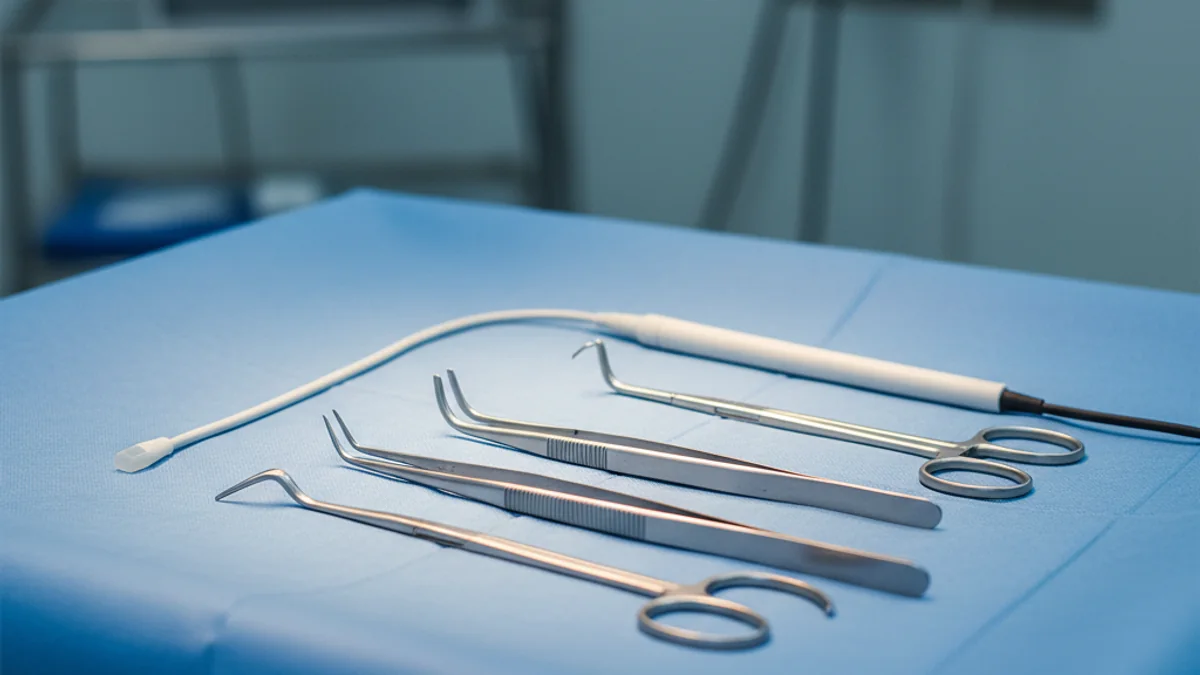
IONM involves placing a specialised endotracheal tube with surface electrodes that contact the vocal cords. A handheld stimulation probe is used during surgery to identify the recurrent laryngeal nerve, map its course through the surgical field, and confirm its function at the conclusion of dissection. The system provides both auditory signals and waveform display, giving the surgeon real-time information about nerve integrity.
The critical safety benefit of IONM is the staged thyroidectomy protocol: if nerve signal loss is detected on one side during total thyroidectomy, the surgeon can elect to stage the contralateral dissection to a second operation, thereby preventing bilateral recurrent laryngeal nerve injury, a devastating complication that can cause airway compromise requiring tracheostomy. This safety net is only available with IONM.
Surgical Technique
Dr. Vidhyadharan performs thyroidectomy through a cosmetic collar incision of 3-5 cm placed in a natural skin crease. The surgery proceeds with subplatysmal flap elevation, midline separation of strap muscles, and careful capsular dissection of the thyroid gland. Key technical steps include:
- Identification and preservation of the recurrent laryngeal nerve using a combination of visual identification and IONM confirmation. The nerve is traced from its entry point at the thoracic inlet to its insertion into the larynx, with IONM stimulation confirming functional integrity.
- Identification and preservation of the external branch of the superior laryngeal nerve, which controls pitch modulation. IONM can assist in identifying this nerve, particularly important for professional voice users.
- Parathyroid gland preservation through meticulous identification of all parathyroid glands and their vascular pedicles. When a gland's blood supply is compromised, immediate auto-transplantation into the sternocleidomastoid muscle is performed.
- Berry's ligament dissection at the area of closest proximity between the recurrent laryngeal nerve and the thyroid gland, where most nerve injuries historically occur. IONM provides an additional layer of safety in this critical zone.
- Energy-based vessel sealing for efficient haemostasis while minimising thermal spread to adjacent nerves and parathyroid glands.
Minimally Invasive and Specialised Approaches
For select patients, Dr. Vidhyadharan's FICRS fellowship training enables consideration of minimally invasive and robotic-assisted approaches. His training in microsurgery at Chang Gung Memorial Hospital in Taiwan and skull base surgery at Toronto General Hospital in Canada provides the technical foundation for managing even the most complex thyroid cases, including revision thyroidectomy, completion thyroidectomy in a scarred field, and thyroidectomy for cancer invading the trachea, oesophagus, or recurrent laryngeal nerve.
Understanding what to expect during recovery is important for all thyroidectomy patients. Our detailed guide on thyroidectomy recovery covers the postoperative journey comprehensively.
What to Expect: Your Treatment Journey
Preoperative Preparation
Your journey at THANC Hospital begins with a comprehensive consultation. Dr. Vidhyadharan reviews your imaging, FNAC results, and blood work, performs a neck examination and flexible laryngoscopy, and discusses the recommended surgical approach in detail. Questions about voice outcomes, calcium management, thyroid hormone replacement, and surgical risks are addressed thoroughly. Preoperative anaesthesia assessment is completed, and any optimisation (calcium and vitamin D supplementation, control of hyperthyroidism with medications before surgery, beta-blockers for Graves' disease) is initiated as needed.
Day of Surgery
You are admitted on the morning of surgery. After general anaesthesia induction and placement of the IONM endotracheal tube, the surgery proceeds as described above. Surgery duration ranges from 1-1.5 hours for hemithyroidectomy to 2-3 hours for total thyroidectomy with central neck dissection.
Immediate Postoperative Care
Voice is assessed within hours of waking from anaesthesia. Oral intake is resumed the same day. Pain is typically mild and managed with standard analgesics. After total thyroidectomy, calcium levels are monitored at 6- and 12-hour intervals to detect early hypoparathyroidism. Oral calcium and vitamin D supplements are initiated if levels trend downward.
Discharge and Early Follow-Up
Most hemithyroidectomy patients are discharged the same day or the following morning. Total thyroidectomy patients are typically discharged on postoperative day 1-2 once calcium levels are stable. A follow-up visit at 1-2 weeks includes wound assessment, calcium level check, and initiation of levothyroxine therapy if not already started.
Histopathology Review
The final pathology report is available within 7-10 days. Dr. Vidhyadharan schedules a dedicated consultation to discuss the findings. For cancer patients, risk stratification is completed and the need for radioactive iodine therapy is discussed in the multidisciplinary tumour board at THANC Hospital.
Recovery and Rehabilitation
First Two Weeks
The neck incision is closed with absorbable sutures and covered with skin closure strips. Mild neck stiffness and discomfort are normal and improve rapidly. Voice may be slightly husky for a few days, even with intact nerve function, due to endotracheal tube-related vocal cord oedema. Most patients return to desk work within 7-10 days.
Weeks Two to Six
Activity levels increase progressively. Light exercise can be resumed at 2 weeks, and full physical activity including gym workouts and swimming at 4-6 weeks. The incision continues to heal, and silicone-based scar treatment may be recommended to optimise cosmesis.
Long-Term Medication and Monitoring
After total thyroidectomy, lifelong levothyroxine replacement is required. The dose is adjusted based on TSH levels checked at 6-8 weeks postoperatively and then every 3-6 months until stable. For thyroid cancer patients, TSH targets are set based on ATA risk stratification, suppressive dosing for higher-risk patients, near-normal TSH for low-risk patients.
After hemithyroidectomy, thyroid function is checked at 6-8 weeks. Approximately 50-80% of patients maintain adequate thyroid function with the remaining lobe. Those with elevated TSH levels are started on levothyroxine supplementation.
Calcium and vitamin D levels are monitored after total thyroidectomy. Temporary hypoparathyroidism (occurring in 5-15% of patients) typically resolves within weeks to months with calcium and vitamin D supplementation. Permanent hypoparathyroidism is uncommon (<1-2%) with experienced surgical technique and careful parathyroid preservation.
Outcomes and Prognosis
Thyroidectomy outcomes at THANC Hospital reflect Dr. Vidhyadharan's commitment to surgical excellence and technology-assisted safety:
- Recurrent laryngeal nerve injury: Temporary hoarseness occurs in approximately 3-5% of patients and resolves within weeks. Permanent nerve injury occurs in less than 1% with routine IONM use and experienced surgical technique.
- Hypoparathyroidism: Temporary hypocalcaemia after total thyroidectomy occurs in 5-15% of patients and typically resolves within weeks to months. Permanent hypoparathyroidism occurs in less than 1-2% with meticulous parathyroid preservation technique.
- Oncological completeness: For thyroid cancer patients, complete tumour removal with clear surgical margins is the standard. Appropriate lymph node compartment clearance is performed when indicated, following ATA guidelines.
- Cosmetic outcomes: The collar incision placed in a natural neck crease heals to a fine, often barely visible scar over 6-12 months.
- Hospital stay: One day for hemithyroidectomy, one to two days for total thyroidectomy in the majority of patients.
- Return to work: Most patients return to normal occupational activities within one to two weeks, with full physical activity at four to six weeks.
These outcomes are consistent with the benchmarks reported by high-volume thyroid surgery centres internationally, reflecting the combination of specialised training, high operative volume, and routine IONM use.
Why Choose Dr. Vidhyadharan at THANC Hospital
- Gold Medal MS (ENT) from Annamalai University: demonstrating foundational mastery of head and neck surgical anatomy, the bedrock of safe thyroidectomy.
- MCh Head & Neck Surgery from Amrita Institute: the highest Indian super-speciality qualification in oncological head and neck surgery, with dedicated thyroid surgery training.
- Fellow, European Board of ORL-HNS (FEB-ORL HNS): the premier European certification in head and neck surgery, achieved through rigorous examination.
- FICRS (robotic surgery fellowship): providing expertise in minimally invasive and technology-assisted surgical approaches.
- International training across 8 countries: microsurgery at Chang Gung Memorial Hospital (Taiwan), head and neck surgery at Royal Adelaide Hospital (Australia, ASOHNS fellowship), skull base surgery at Toronto General Hospital (Canada), and fellowships across Europe, Singapore, and South Korea.
- Over 3000 head and neck surgeries: an operative volume that provides the experience base for safe thyroid surgery outcomes.
- IONM for every thyroidectomy: not selective, not occasional, but routine use of nerve monitoring for all thyroid operations as the standard of care.
- Multidisciplinary tumour board at THANC Hospital with endocrinology, nuclear medicine, radiation oncology, pathology, and medical oncology for comprehensive treatment planning.
Cost and Insurance
The cost of thyroidectomy at THANC Hospital depends on the surgical extent and individual clinical requirements:
- Hemithyroidectomy: Costs reflect a shorter procedure with typically a same-day or one-day hospital stay.
- Total thyroidectomy: Costs include the longer operative time, IONM, and one-to-two-day hospital stay.
- Thyroidectomy with neck dissection: Additional costs reflect the extended surgical scope for thyroid cancer with lymph node involvement.
Most health insurance plans in India, including CGHS, ECHS, Ayushman Bharat, and private health insurance policies, cover thyroidectomy. THANC Hospital's billing team assists with insurance pre-authorisation and claims processing. Transparent cost estimates are provided during the initial consultation.
For a personalised assessment and treatment plan, schedule a consultation with Dr. Vidhyadharan Sivakumar at THANC Hospital, Kilpauk, Chennai.
Phone: +91 73059 53378 Location: THANC Hospital, 747 Poonamallee High Road, Kilpauk, Chennai 600010 Book an Appointment
References
- Haugen, B.R., et al. "2015 American Thyroid Association Management Guidelines for Adult Patients with Thyroid Nodules and Differentiated Thyroid Cancer." Thyroid, 2016.
- Randolph, G.W., et al. "Electrophysiologic Recurrent Laryngeal Nerve Monitoring During Thyroid and Parathyroid Surgery: International Standards Guideline Statement." Laryngoscope, 2011.
- Bergenfelz, A., et al. "Complications to Thyroid Surgery: Results as Reported in a Database from a Multicenter Audit Comprising 3,660 Patients." Langenbeck's Archives of Surgery, 2008.
- Dralle, H., et al. "Intraoperative Monitoring of the Recurrent Laryngeal Nerve in Thyroid Surgery." World Journal of Surgery, 2008.
- National Comprehensive Cancer Network (NCCN). "Thyroid Carcinoma." NCCN Guidelines.
- Indian Council of Medical Research (ICMR). National Cancer Registry Programme. Thyroid Disease Prevalence Data.
- Chandrasekhar, S.S., et al. "Clinical Practice Guideline: Improving Voice Outcomes After Thyroid Surgery." Otolaryngology--Head and Neck Surgery, 2013.