
Spasmodic dysphonia (laryngeal dystonia) is a chronic neurological voice disorder that causes involuntary spasms of the vocal cords, disrupting natural speech patterns. For patients seeking spasmodic dysphonia treatment in Chennai, obtaining an accurate neurological diagnosis and target-specific care plan is key to restoring functional speech clarity. At THANC Hospital, Clinical Director Dr. Vidhyadharan Sivakumar leads a specialized laryngology practice providing advanced diagnostic evaluations, electromyography-guided Botulinum toxin therapy, and surgical intervention for refractory voice disorders.
What Is Spasmodic Dysphonia (Laryngeal Dystonia)?
Spasmodic dysphonia is a chronic, focal laryngeal dystonia causing involuntary vocal cord contractions during speech while vegetative functions remain intact.
The disorder arises from a central neurological miscommunication involving the basal ganglia and sensory-motor cortex. In a healthy nervous system, these brain regions precisely coordinate muscle tone and rapid fine-motor control during phonation. In focal laryngeal dystonia, altered sensorimotor integration leads to distorted central feedback. The motor cortex sends inappropriate, hyperactive electrical signals down the recurrent laryngeal nerve during voluntary speech, resulting in unpredictable muscle spasms.
Distinguishing the clinical origin of laryngeal spasms is essential during initial diagnosis. Primary focal laryngeal dystonia occurs as an isolated neurological condition, typically developing idiopathically in adults without generalized movement disorders. Secondary laryngeal spasms stem from underlying neurodegenerative diseases, structural trauma, systemic movement disorders, or tardive dystonia secondary to specific medications.
Dr. Vidhyadharan Sivakumar is an internationally trained laryngologist and Clinical Director at THANC Hospital, Kilpauk, Chennai, with more than 16 years of experience. He assesses voice breaks carefully, because spasmodic dysphonia is often mistaken for stress, strain or other voice disorders.
The Neurological Basis of Focal Laryngeal Dystonia
Focal laryngeal dystonia represents an abnormality in central motor processing within the extrapyramidal system. Cortical sensorimotor integration is impaired, which alters normal inhibition pathways within the basal ganglia. When a person attempts to initiate speech, neural output over-stimulates motor neurons feeding the intrinsic laryngeal muscles. This over-stimulation triggers sustained involuntary contractions that interrupt normal vocal fold vibration without impacting surrounding cervical structures.
Primary vs. Secondary Laryngeal Spasms
Primary spasmodic dysphonia develops independently without structural brain lesions or broad neurological dysfunction. Secondary laryngeal spasms occur as part of systemic neurological conditions such as Parkinsonism, multi-system atrophy, focal brainstem lesions, or post-encephalitic dystonias. A detailed clinical history rules out secondary triggers before initiating target-specific focal treatments.
Recognizing the Symptoms: How Spasmodic Dysphonia Affects Your Voice
Recognizing early symptom patterns allows patients to seek specialized laryngological evaluation before severe vocal exhaustion sets in.
The condition causes distinct acoustic distortions, including sudden voice breaks, involuntary pitch drops, breathy gaps, and physical strain while speaking. Because vocal fold movement is obstructed during spasms, sustaining conversational speech requires substantial physical exertion. This leads to rapid vocal fatigue, throat tightness, and upper chest tension during ordinary interactions.
Daily environmental factors heavily influence symptom severity. Communicating over telephone lines, speaking in noisy environments, attempting to speak over background chatter, and periods of heightened physical fatigue increase nervous system arousal. This central arousal exacerbates the frequency and intensity of intrinsic muscle spasms.
A hallmark feature of spasmodic dysphonia is task-specific preservation. Patients frequently discover that non-speech vocalizations—such as laughing, coughing, crying, humming, or singing—sound completely normal. Singing and emotional vocalizations recruit distinct neural networks and subcortical pathways that bypass the hyperactive basal ganglia loops controlling standard phonation. Understanding this distinction reassures patients that their vocal cords are structurally normal.
Common Voice Characteristics and Environmental Triggers
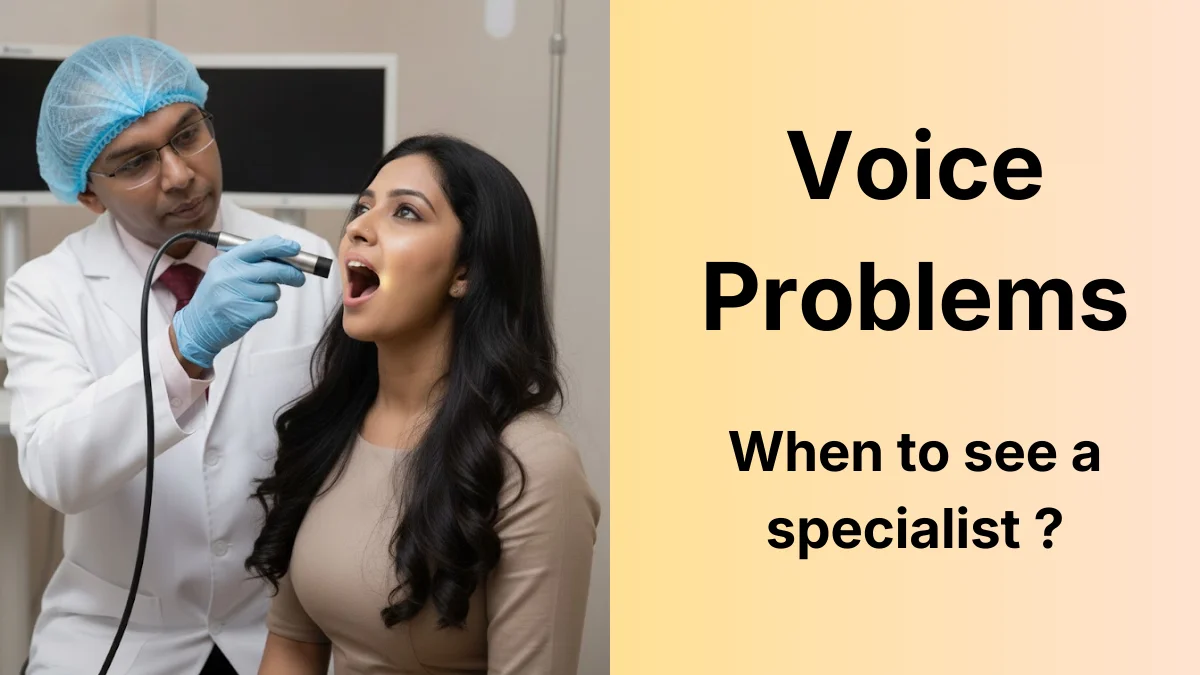
Vocal presentation varies based on individual muscle involvement, but patients commonly experience tight, effortful phonation interspersed with abrupt voice dropouts. Background noise forces patients to exert greater vocal effort, which heightens motor cortex activity and worsens vocal breaks. Emotional stress acts similarly, triggering central nervous system arousal that amplifies involuntary laryngeal contractions. If you are unsure whether your symptoms need a specialist, see when to see a voice specialist.
Task-Specific Preservation: Why Singing or Laughter Sounds Normal
Task-specific preservation occurs because different vocal activities utilize separate central motor pathways. Phonation during laughter or crying relies on primitive limbic circuits, while singing engages right-hemisphere motor loops and continuous pitch control mechanisms. Because spasmodic dysphonia specifically targets the automatic motor execution of conversational speech, these alternate pathways remain functional. Singers can find general voice-care advice in our guide for singers and vocal artists.
Impact of Spasmodic Dysphonia on High-Demand Occupations in India
Navigating professional vocal demands with an unpredictable voice condition presents severe practical and emotional challenges for working adults.
In India, high-voice-demand professions—such as school teachers, call center agents, corporate managers, legal advocates, and classical singers—rely on vocal stamina. When spasmodic dysphonia strikes, the sudden onset of strain and voice breaks compromises daily work performance. Teachers struggle to lecture over classroom noise, while customer support professionals find phone interactions exhausting.
The chronic effort required to speak leads to physical vocal fatigue, upper chest muscle tension, and secondary throat pain. Over time, the inability to control speech output causes anxiety in professional settings, leading many working individuals to avoid meetings, turn down promotional opportunities, or consider early career exit.
Managing workplace vocal demands safely requires acoustic modifications and vocal pacing strategies. Utilizing personal voice amplification systems reduces the physical subglottic pressure needed to speak. Implementing scheduled periods of vocal rest, modifying phone setups with noise-canceling headsets, and working with a speech pathologist help professionals maintain career continuity.
Challenges for Educators, Call Center Workers, and Public Speakers
Educators and call center employees face continuous vocal loads that rapidly exhaust hyperactive laryngeal muscles. In noisy working environments, trying to increase voice volume triggers stronger involuntary muscle spasms. This creates a cycle where physical effort increases voice breaking, accelerating physical exhaustion by the middle of the workday. Teachers can also read our guide to voice strain in teachers.
Vocal Fatigue and Work-Related Communication Barriers
Persistent vocal breaks alter workplace dynamics, often leading colleagues to misinterpret speech strain as nervousness or lack of confidence. The resulting emotional strain often leads professionals to isolate themselves socially and professionally. Early intervention with specialized treatment helps restore speech fluency and reduces work-related vocal exhaustion.
Adductor vs. Abductor Spasmodic Dysphonia: Comparing Clinical Types
Determining the exact anatomical subtype of spasmodic dysphonia is necessary to guide effective medical and surgical treatment.
Adductor SD: Tight, Strained, and Broken Speech
Adductor Spasmodic Dysphonia (AdSD) accounts for approximately 80% to 90% of all diagnosed cases. In AdSD, the thyroarytenoid (TA) and lateral cricoarytenoid (LCA) muscle complexes contract hyperactively during speech. These involuntary contractions slam the vocal folds tightly together, stopping subglottic airflow. The resulting speech sounds choked, strained, and squeezed, featuring sudden voice breaks on voiced vowels such as those in "eat," "every," or "always."
Abductor SD: Sudden Breathy and Whispered Breaks
Abductor Spasmodic Dysphonia (AbSD) represents roughly 10% of cases. In AbSD, the posterior cricoarytenoid (PCA) muscles contract involuntarily during speech initiation. Because the PCA muscles are the sole vocal fold abductors, their contraction pulls the vocal cords wide open when they should be meeting at the midline. This allows air to escape rapidly through the glottis, causing sudden breathy voice dropouts or whispers, particularly when pronouncing voiceless consonants such as "p," "t," "k," "f," and "s."
Mixed SD and Muscle Group Target Mapping
Mixed Spasmodic Dysphonia features a combination of adductor and abductor muscle spasms, causing alternating strained breaks and sudden breathy dropouts. Precise acoustic-phonetic testing maps the precise involvement of each muscle group to guide targeted therapy.
| Subtype Feature | Adductor SD (AdSD) | Abductor SD (AbSD) | Mixed SD |
|---|---|---|---|
| Dominant Muscle Involvement | Thyroarytenoid (TA) & Lateral Cricoarytenoid (LCA) | Posterior Cricoarytenoid (PCA) | Combined TA/LCA and PCA muscle involvement |
| Primary Acoustic Quality | Strained, strangled, tight, choked voice breaks | Sudden breathy gaps, unvoiced whispering, air leakage | Alternating strained breaks and breathy dropouts |
| Phonetic Triggers | Voiced vowels and voiced sentence passages | Voiceless consonants (p, t, k, f, s) | Complex triggers across voiced and voiceless sounds |
| Targeted Intervention Site | Bilateral or unilateral Thyroarytenoid muscle complex | Posterior Cricoarytenoid muscle complex | Staggered or asymmetric multi-muscle targeting |
Differential Diagnosis: Distinguishing SD from Muscle Tension Dysphonia and Vocal Tremor
Accurate clinical differentiation prevents misdiagnosis between neurological movement disorders and functional voice conditions.
Spasmodic Dysphonia vs. Muscle Tension Dysphonia (MTD)
Muscle Tension Dysphonia (MTD) is a functional, non-neurological voice disorder characterized by excessive hyperfunction of the intrinsic and extrinsic laryngeal musculature. Unlike spasmodic dysphonia, MTD is not caused by central basal ganglia dysfunction. In MTD, vocal strain remains constant across all speech tasks, including singing, humming, and laughter. MTD responds fully to direct voice therapy, whereas spasmodic dysphonia requires focal neurological interventions such as Botulinum toxin or surgical nerve modification. Muscle tension and strain are covered in our guide to voice therapy vs surgery.
Spasmodic Dysphonia vs. Essential Vocal Tremor
Essential Vocal Tremor presents as a rhythmic, oscillatory movement of the vocal folds during sustained phonation, causing a predictable modulation in pitch and loudness. In contrast, spasmodic dysphonia presents with irregular, sudden, and spasmodic voice breaks. While essential vocal tremor can coexist with spasmodic dysphonia, identifying the primary driver ensures that treatments target the correct pathophysiological mechanism.
How Laryngologists Diagnose Spasmodic Dysphonia
Diagnostic evaluation requires objective clinical testing to evaluate vocal fold mechanics and confirm hyperactive nerve signaling patterns.
Flexible Videostroboscopy and Acoustic Phonetic Testing
Flexible videostroboscopy allows real-time visualization of vocal fold vibration and mucosal wave dynamics during speech. A thin, flexible endoscope equipped with a camera is passed through the nasal passage to view the larynx from above. Synchronized stroboscopic light reveals subtle irregularities in vocal cord closure.
During the examination, the patient reads standardized phonetic sentence lists containing voiced versus voiceless phonemes. Observing involuntary hyperadduction during voiced phrases alongside normal abduction during non-speech tasks confirms the diagnosis.
Laryngeal Electromyography (LEMG) Muscle Mapping
Laryngeal Electromyography (LEMG) evaluates motor unit action potentials within specific intrinsic laryngeal muscles. Small needle electrodes inserted percutaneously into the thyroarytenoid or posterior cricoarytenoid muscles measure electrical activity during active phonation and vocal rest. LEMG confirms hyperactive motor firing characteristic of focal dystonia, helping rule out mechanical joint fixation or vocal fold paralysis before initiating treatment injections.
Botulinum Toxin Injection for Spasmodic Dysphonia
Targeted local injections of Botulinum toxin represent the standard medical therapy for reducing focal laryngeal muscle spasms.
Mechanism of Action and Neuromuscular Blockade
Botulinum toxin blocks acetylcholine release at the presynaptic neuromuscular junction. By temporarily inhibiting signal transmission from motor nerve endings to laryngeal muscle fibers, the toxin decreases the force of involuntary contractions. This prevents hyperactive vocal fold clamping while leaving sufficient muscle tone for functional speech and airway protection.
Step-by-Step EMG-Guided Injection Procedure
- The patient sits comfortably in an examination chair with the neck slightly extended.
- Local anesthetic is applied to the skin overlying the thyroid cartilage and cricothyroid membrane.
- A hollow-bore EMG recording needle connected to an audio monitor is inserted percutaneously through the cricothyroid membrane into the target thyroarytenoid muscle.
- The patient is asked to sustain a vowel sound ("ah"); crisp, high-frequency motor unit action potential crackles on the EMG monitor confirm accurate needle tip placement within the hyperactive muscle belly.
- A calibrated dose of Botulinum toxin (typically 1.0 to 2.5 units per side) is injected directly into the muscle.
- The needle is withdrawn, and the procedure is repeated on the contralateral side or focused unilaterally based on the treatment plan.
Post-Injection Phases: The Breathy Voice Period and Dosage Calibration
Following injection, patients undergo a predictable recovery arc. During the first 7 to 14 days, temporary weakness of the injected muscles causes a breathy, soft voice and mild tightness when swallowing thin liquids. As muscle tone stabilizes, speech transitions into a phase of smooth, effortless phonation lasting between 3 and 4 months. As presynaptic nerve terminals sprout new sprouts over time, muscle strength gradually returns, indicating the need for a repeat maintenance injection.
Treatment Options Comparison: Efficacy, Duration, and Suitability
Selecting the right management path depends on subtype accuracy, occupational demands, treatment history, and patient preferences.
| Treatment Modality | Primary Efficacy | Expected Duration of Benefit | Patient Eligibility & Considerations |
|---|---|---|---|
| Botulinum Toxin Injections | High (85–90% improvement for AdSD) | Temporary (3 to 4 months per treatment) | Standard medical treatment; requires periodic maintenance injections. |
| Specialized Voice Therapy | Moderate (as sole therapy); High (as adjuvant) | Long-term compensatory techniques | Mandatory adjuvant tool to eliminate secondary vocal straining mechanisms. |
| Selective Laryngeal Adductor Denervation-Reinnervation (SLAD-R) | High for severe refractory AdSD | Potential long-term symptom relief | Surgical candidacy required; long-term nerve reinnervation timeline. |
| Type II Thyroplasty (Laryngeal Framework Surgery) | High for refractory AdSD | Long-lasting structural adjustment | Surgical option for patients seeking alternatives to recurrent injections. |
Surgical Options for Refractory Spasmodic Dysphonia
When non-invasive measures or repeated injections fail to provide relief, surgical interventions offer alternative options for managing severe adductor spasmodic dysphonia.
Selective Laryngeal Adductor Denervation-Reinnervation (SLAD-R)
Selective Laryngeal Adductor Denervation-Reinnervation (SLAD-R) is a microsurgical procedure designed to address adductor spasms without causing permanent vocal fold atrophy. The surgeon selectively sever the motor branches of the recurrent laryngeal nerve that innervate the hyperactive thyroarytenoid and lateral cricoarytenoid muscles. Reinnervation techniques are also used for vocal cord paralysis.
To maintain muscle bulk and prevent vocal cord thinning over time, the distal nerve stumps are reinnervated using donor nerve fibers from the ansa cervicalis. Dr. Vidhyadharan Sivakumar led Tamil Nadu's first laryngeal reinnervation procedure, bringing advanced surgical options for complex voice conditions to the region.
Type II Thyroplasty and Laryngeal Framework Surgery
Type II Thyroplasty is a laryngeal framework procedure designed to prevent forced vocal fold adduction during speech. Under local anesthesia, the surgeon performs a vertical midline incision in the thyroid cartilage and lateralizes the anterior vocal fold attachments using titanium bridges or silicone spacers.
By holding the vocal cords slightly apart, the surgery prevents hyperadductive clamping while maintaining adequate glottic closure for swallowing safety. This structural adjustment eliminates reliance on recurrent injections for select patients.
Myths vs. Facts About Spasmodic Dysphonia
Clearing common misconceptions helps patients seek appropriate medical care without unnecessary self-blame.
Myth: Spasmodic Dysphonia Is Psychological or Caused by Anxiety
Fact: Spasmodic dysphonia is a organic focal dystonia of central nervous system origin, not a psychological disorder. While emotional stress can heighten central nervous system arousal and temporarily worsen spasms, stress does not cause the condition.
Myth: Vocal Strain and Abuse Cause Laryngeal Dystonia
Fact: Mechanical vocal abuse leads to structural lesions like vocal nodules or polyps, but it does not cause laryngeal dystonia. Spasmodic dysphonia stems from central basal ganglia miscommunication rather than poor speaking mechanics.
Myth: Voice Therapy Alone Can Cure the Condition
Fact: Speech therapy cannot alter basal ganglia signaling to stop neurological spasms on its own. However, specialized voice therapy serves as a critical secondary tool to eliminate compensatory strain, optimize breath support, and enhance the benefits of medical or surgical treatments.
Spasmodic Dysphonia Treatment in Chennai at THANC Hospital
Dr. Vidhyadharan Sivakumar is an internationally trained laryngologist (voice box specialist), trained in eight countries, and Clinical Director at THANC Hospital (The Head and Neck Centre & Hospital) in Kilpauk, Chennai. He has more than 16 years of experience and more than 3,000 surgeries, and led Tamil Nadu's first laryngeal reinnervation. He offers botulinum toxin injections, voice therapy and, for selected patients, surgical options. Every plan starts with a detailed voice assessment at his voice clinic and continues with voice therapy.
- Hospital: THANC Hospital, No. 747, Poonamallee High Road, Kilpauk, Chennai
- Phone: +91 73059 53378
- Appointments: book a consultation with Dr. Vidhyadharan