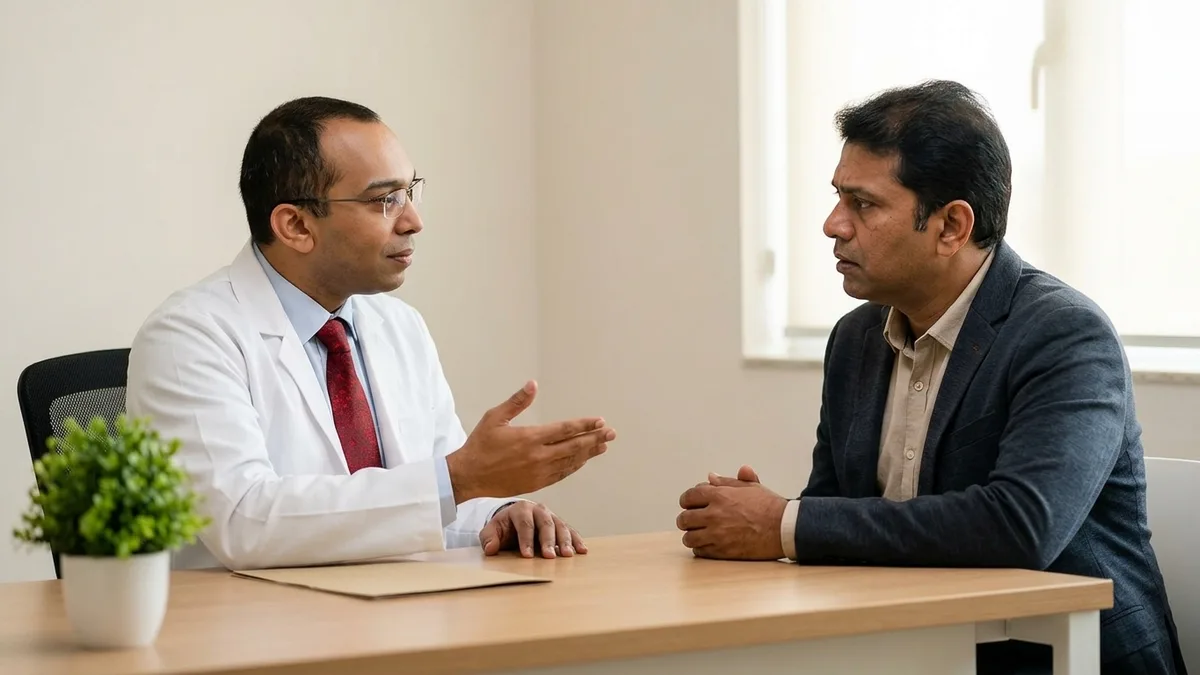
Most mouth ulcers are harmless and heal within two weeks. But an ulcer that does not heal can sometimes be an early sign of oral cancer. A simple specialist check tells the difference. It gives reassurance when the ulcer is harmless, and catches a problem early when it is not, which is when treatment is simplest and most successful. At THANC Hospital in Chennai, Dr. Vidhyadharan Sivakumar evaluates non-healing mouth ulcers quickly and clearly.
When a Mouth Ulcer Needs Checking
Have your ulcer checked if it:
- Lasts longer than two to three weeks
- Is painless, which can be misleading
- Keeps coming back in the same spot
- Bleeds easily or will not settle
- Has a hard, raised or rolled edge
- Comes with a white or red patch, or a lump in the neck
The risk is higher if you use tobacco in any form, drink alcohol, or both. Our guide covers the full list of oral cancer warning signs.
Harmless Ulcers Versus Warning Ulcers
Most mouth ulcers are harmless and heal by themselves. Knowing the difference helps you decide when to act.
A harmless ulcer is usually painful, small, and has a soft, even edge. Common causes include a bite to the cheek or tongue, a sharp tooth or denture rubbing the lining, a viral infection, or aphthous ulcers (recurrent mouth ulcers). These settle within one to two weeks once the cause is removed.
A warning ulcer behaves differently. It often lasts beyond three weeks, may be painless, and can have a hard, raised or rolled edge. It may sit on the side of the tongue, the floor of the mouth, or the gum behind the back teeth, which are higher-risk sites. It may bleed when touched and may come with a white or red patch nearby. These features are the reason to see a specialist rather than wait.
Why Early Evaluation Matters
Oral cancer found early is highly treatable, often with simpler surgery and a better outcome. Found late, it needs bigger treatment and recovery is harder. A non-healing ulcer is one of the most common early signs, which is why checking it promptly is one of the most useful things you can do for your health.
This is especially important in India, where tobacco in the form of paan, gutka and chewing tobacco is widespread. Tobacco held against the cheek or gum exposes that part of the mouth to carcinogens for long periods, and this is reflected in where many oral cancers appear. If you use tobacco and have a sore that will not heal, it should always be checked.
What the Evaluation Involves
Dr. Vidhyadharan follows a clear, reassuring process, most of which is done in a single clinic visit.
Examination
He examines the whole lining of the mouth, not just the ulcer, including the tongue, the floor of the mouth, the cheeks, the gums and the area behind the back teeth. He then examines the neck, feeling for any enlarged lymph node. Looking at the whole mouth matters, because a second patch or ulcer elsewhere can change the picture.
Close Inspection of the Ulcer
He looks closely at the ulcer's edge, base and surrounding tissue, and notes whether it is fixed to deeper tissue. The pattern of the edge and base often gives the first clue about whether it is harmless or needs a biopsy.
Biopsy
If anything looks suspicious, a small sample of tissue is taken under local anaesthetic. The area is numbed first, so discomfort is minimal. A biopsy is the only way to be certain, and it tells the difference between a harmless ulcer, a pre-cancerous change, and cancer. Results are usually ready within a few days.
What Happens Next
If the ulcer is harmless, Dr. Vidhyadharan explains the likely cause, how to help it heal, and how to lower any risk factors such as tobacco or a sharp tooth. You leave with clear advice and peace of mind.
If the biopsy shows a pre-cancerous change, such as leukoplakia or erythroplakia or oral submucous fibrosis, you are guided into the right monitoring or treatment before it can progress. Catching a change at this stage can prevent a cancer from ever forming.
If it shows cancer, you move straight into care planned by a multidisciplinary team. Finding it early gives the best chance of a simple, successful treatment, and may avoid the need for large surgery or reconstruction.
Reducing Your Risk
You can lower your risk of oral cancer with a few clear steps:
- Stop tobacco in every form, including smoking, paan, gutka and chewing tobacco. This is the single most effective change you can make.
- Cut down or stop alcohol, especially if combined with tobacco, since the two together multiply the risk.
- Fix sharp teeth or ill-fitting dentures that keep rubbing the lining.
- Check your own mouth each month in good light, looking for any ulcer, patch or lump.
- See a specialist for any sore that does not heal in three weeks.
Regular self-checks and prompt evaluation are simple habits that catch problems early, when they are easiest to treat.
Why Choose Dr. Vidhyadharan at THANC Hospital
- Head and neck surgical oncology training. MCh (Head & Neck Surgery) and European Board certification (FEB-ORL HNS).
- Expertise in early detection of oral cancer and pre-cancerous changes.
- Prompt appointments so a worrying ulcer is checked without delay.
- A full team for diagnosis, treatment and follow-up if anything is found.
This is part of our wider oral cancer care.
Cost and Insurance
A clinic evaluation is straightforward, and a biopsy, if needed, is a small procedure. Most health insurance policies cover medically indicated investigation and treatment. THANC Hospital explains any costs clearly during your visit.
To have a non-healing mouth ulcer checked by Dr. Vidhyadharan Sivakumar, request an appointment online.