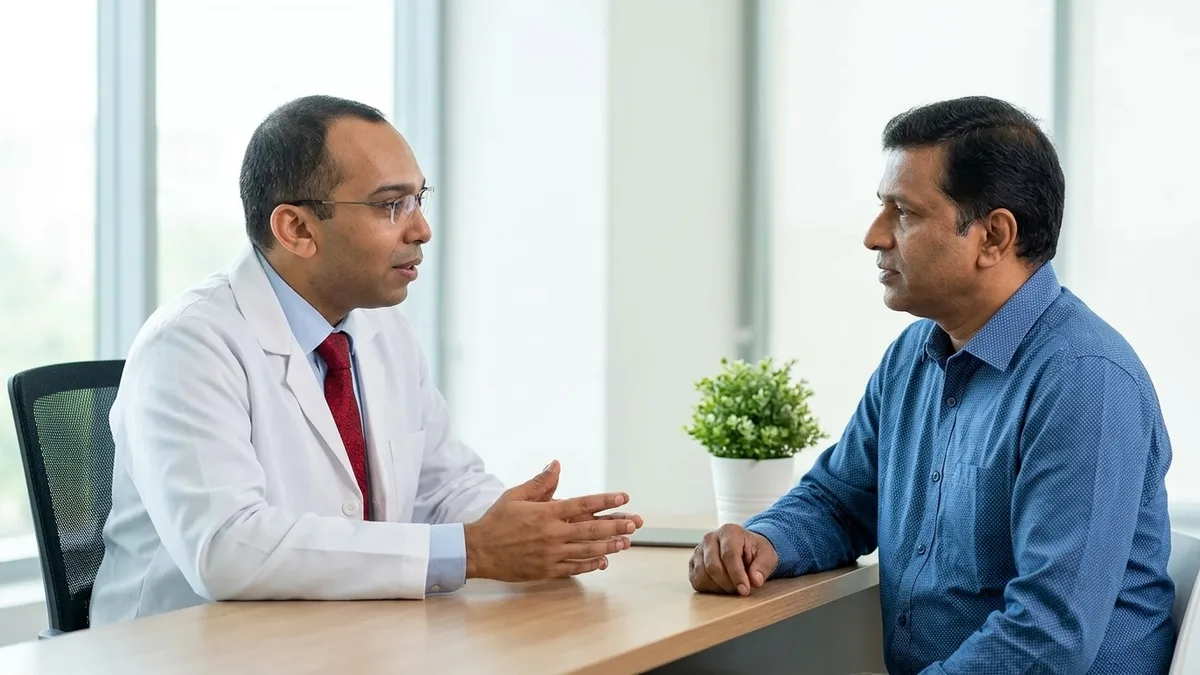
If your jaw or cheek swells up painfully around mealtimes, a salivary gland stone is a common cause. The stone blocks the flow of saliva, so the gland swells when it tries to work. The good news is that most stones can now be removed in a gland-sparing way, keeping the gland working. At THANC Hospital in Chennai, Dr. Vidhyadharan Sivakumar uses sialendoscopy and other minimally invasive methods to clear salivary stones. This page is part of our wider sialendoscopy and salivary care.
What Is a Salivary Stone?
A salivary stone, or sialolith, is a small hard deposit that forms inside a salivary gland or its duct. The most common site is the submandibular gland under the jaw, because its duct runs uphill and saliva is thicker there. When a stone blocks the duct, saliva backs up and the gland swells, often just as you start to eat.
Symptoms
The typical signs are:
- Swelling of the jaw or cheek that is worse around meals
- Pain or tenderness over the gland
- A bad taste or repeated infections in the same place
- Swelling that comes and goes
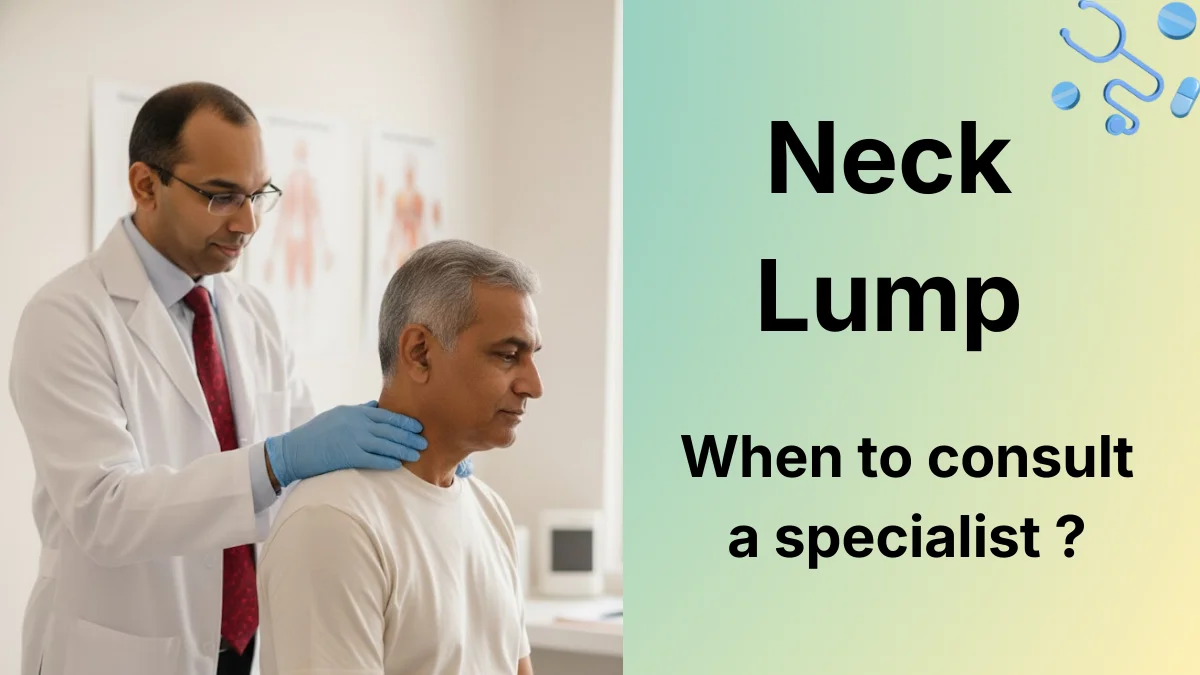
A swelling that keeps returning should be checked. Our guide explains when a neck lump is a concern.
Diagnosis at THANC Hospital
Dr. Vidhyadharan confirms the stone and plans the gentlest way to remove it:
- Clinical examination of the gland and the floor of the mouth.
- Ultrasound scan, which shows most stones and the state of the gland.
- CT scan in selected cases, for deep or multiple stones.
- Diagnostic sialendoscopy, where a fine scope looks directly inside the duct.
Why Stones Form
Saliva contains minerals. When saliva flows slowly or becomes thick, these minerals can settle and harden into a stone over time. The submandibular gland under the jaw is the most common site, for two reasons: its duct runs uphill against gravity, and its saliva is thicker than that of the other glands. Dehydration, some medications that dry the mouth, and a previous narrowing of the duct can all make stones more likely. A long-standing stone can itself scar and narrow the duct, a salivary duct stricture. Once a stone forms, it can block the duct partly or completely, which causes the swelling.
How Stones Are Removed
The approach depends on the size and position of the stone. The aim, wherever possible, is to clear the stone while keeping the gland.
Sialendoscopy
For many stones, Dr. Vidhyadharan passes a very fine scope into the duct, finds the stone and removes it, often by catching it in a tiny basket. Larger stones may be broken into smaller pieces first so they can be drawn out. The gland is kept and continues to work. We explain the technique on our sialendoscopy procedure page.
Transoral Stone Removal
A stone sitting near the duct opening, in the floor of the mouth, can often be removed through a small incision inside the mouth. There is no skin scar, and the gland is kept. This is a good option for stones that can be felt close to the surface.
Combined Approach
Some stones are best treated with a combination, using the scope to locate the stone and a small intraoral opening to retrieve it. Dr. Vidhyadharan chooses the gentlest combination that will clear the stone fully.
Gland Removal
Only when a gland is badly damaged by repeated infection, or a large, deep stone cannot be reached any other way, is removal of the gland advised. For the submandibular gland this is a submandibular gland excision. This is now needed far less often than before sialendoscopy became available.
What to Expect
Before the procedure. Examination and an ultrasound scan, sometimes with a diagnostic scope to see inside the duct. Dr. Vidhyadharan explains the plan and which method suits your stone.
The procedure. Stone removal by sialendoscopy is often a day case under general or local anaesthetic.
Recovery. Most patients go home the same day and return to normal activities within a day or two. There may be mild swelling of the gland for a short while.
Recovery and Aftercare
A few simple steps help recovery and reduce the chance of new stones:
- Stay well hydrated to keep saliva flowing and the duct clear.
- Massage the gland gently, if advised, to help move saliva through.
- Use sour sweets or citrus if suggested, to encourage saliva flow.
- Keep good oral hygiene to reduce infection.
- Tell your specialist if swelling returns, so any new stone can be treated early.
Outcomes
Gland-sparing stone removal works well for most patients. The blocked stone is cleared, the painful mealtime swelling settles, and the gland keeps working. Keeping the gland avoids a neck operation and preserves normal saliva. Stones can sometimes form again, but the same gland-sparing methods can be used to clear them, and good hydration and oral care lower the risk.
Why Choose Dr. Vidhyadharan at THANC Hospital
- Head and neck surgical training. MCh (Head & Neck Surgery) and European Board certification (FEB-ORL HNS), with expertise in gland-sparing salivary surgery.
- Minimally invasive sialendoscopy that keeps the gland wherever possible.
- 3000+ head and neck operations, the volume linked to better outcomes.
- In-house imaging at THANC Hospital for quick, accurate diagnosis.
Treatment Cost and Insurance
The cost depends on the method used, whether it is a day case or needs admission, and the room category. Most major health insurers in India cover medically indicated salivary surgery, including cashless treatment at empanelled hospitals. Eligible patients may also use government schemes such as Ayushman Bharat (AB-PMJAY) or the Tamil Nadu CMCHIS.
THANC Hospital gives a clear estimate during your consultation. To see Dr. Vidhyadharan Sivakumar, request an appointment online.