A lump in front of or just below the ear is one of the most common reasons patients are referred to a salivary gland specialist. Most of these lumps come from the parotid gland, the largest of the salivary glands. The operation to remove them is called a parotidectomy. At THANC Hospital in Chennai, Dr. Vidhyadharan Sivakumar performs parotid tumour surgery with one main priority: removing the tumour completely while protecting the facial nerve that runs through the gland and controls the movement of your face. His training in head and neck surgical oncology and microsurgery helps him combine careful nerve preservation with a good cosmetic result.
Understanding the Parotid Gland
The parotid glands are the largest pair of salivary glands. They sit just in front of and below each ear and extend down towards the angle of the jaw. They make saliva that drains into the mouth through a small duct opposite the upper molars. What makes parotid surgery demanding is the anatomy. The facial nerve, which closes the eye, lifts the smile and controls facial expression, passes directly through the gland and divides it into a superficial (outer) lobe and a deep (inner) lobe. Any operation on the gland must first find and protect this nerve.
Most parotid swellings are benign. But because a few are cancerous, and because benign tumours tend to enlarge slowly over the years, a persistent parotid lump should always be assessed by a head and neck specialist rather than simply watched.
Types of Parotid Tumours
Parotid tumours are either benign or malignant. The type guides how much of the gland is removed.
Pleomorphic adenoma is the most common benign parotid tumour. It is slow-growing and painless. Over many years a small proportion can turn cancerous, which is why removal is usually advised.
Warthin's tumour is the second most common benign tumour. It is more frequent in older men and in smokers, and is sometimes present in both glands. We cover it in detail on our Warthin's tumour page.
Malignant (cancerous) parotid tumours are less common. They include mucoepidermoid carcinoma, adenoid cystic carcinoma and others. Warning features include rapid growth, pain, facial weakness, skin involvement or a hard fixed lump. These need a more extensive operation, often with additional treatment. We explain this further on our salivary gland cancer page.
Signs and Symptoms
A parotid tumour usually shows up as a painless, slowly growing lump in front of or below the ear, or near the angle of the jaw. Many are noticed by chance. See a specialist sooner if you notice any of the following:
- A lump that is growing, hard, or fixed to the skin or deeper tissue
- Pain in or around the gland
- Weakness, twitching or drooping of the face on the same side
- Numbness of the skin over the lump
- A lump in the neck as well as the parotid swelling
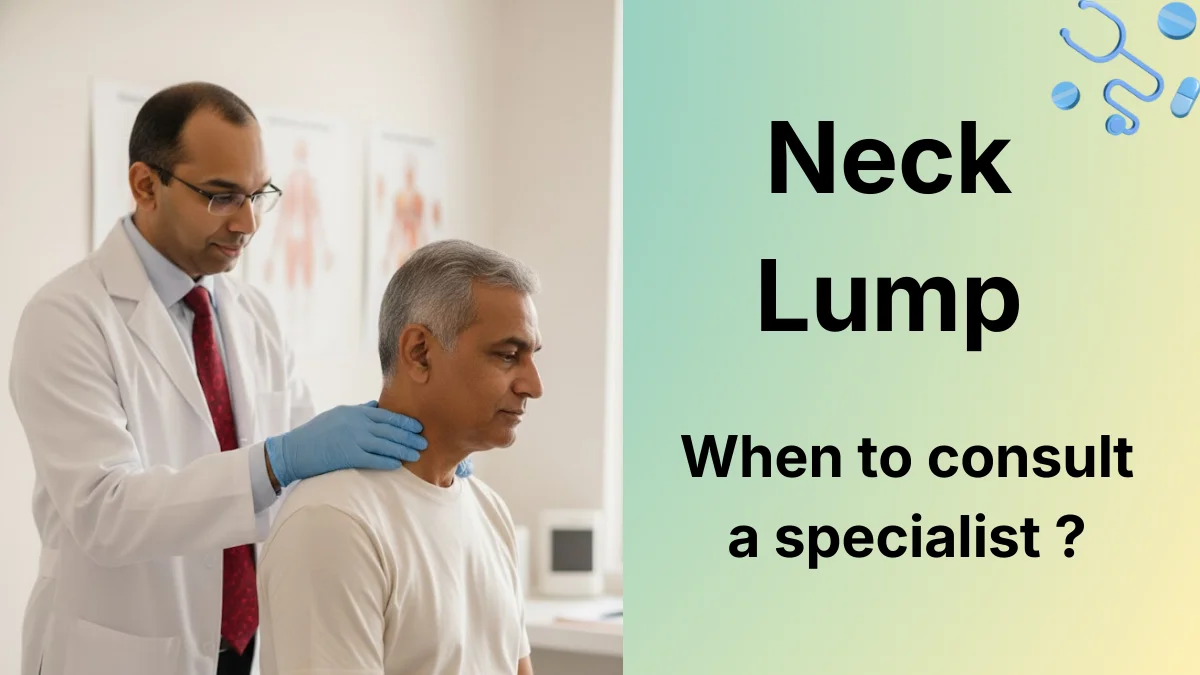
Facial weakness with a parotid lump is an important warning sign and needs prompt assessment. A lump that does not settle should never be ignored. Our guide explains when a neck lump is a concern.
Diagnosis at THANC Hospital
Dr. Vidhyadharan follows a clear pathway to understand the tumour and plan the safest operation:
- Clinical examination of the gland, the facial nerve and the neck.
- Ultrasound scan, the first imaging test, to assess the lump and guide the needle test.
- Fine-needle aspiration cytology (FNAC), a simple needle sample that helps tell benign from malignant before surgery.
- MRI scan for larger or deep-lobe tumours, to map how the tumour sits next to the facial nerve.
- CT scan in selected cases, mainly where bone involvement or cancer is suspected.
If there is any suspicion of cancer, the case is reviewed by a multidisciplinary tumour board so the surgical plan and any extra treatment are agreed before the operation.
How Dr. Vidhyadharan Performs a Parotidectomy
The operation is done under general anaesthetic. The aim is to remove the tumour completely, keep the facial nerve working, and leave a good cosmetic result.
Superficial (Partial) Parotidectomy
Most benign tumours sit in the superficial lobe. For these, Dr. Vidhyadharan removes the part of the gland that lies outer to the facial nerve and leaves the nerve and the deep lobe intact. For small, well-defined benign tumours, an even more limited removal of just the tumour with a rim of normal gland may be enough.
Total Parotidectomy
When a tumour involves the deep lobe, or in certain cancers, the whole gland is removed. This is a total parotidectomy. The facial nerve is still preserved wherever the tumour allows.
Facial Nerve Protection
During the operation, the facial nerve is found at its main trunk and traced through the gland. Dr. Vidhyadharan uses intra-operative nerve monitoring, which gives real-time feedback and helps protect facial movement. The incision is placed discreetly in front of the ear and within a natural neck crease, so the scar heals well and stays hidden.
For aggressive cancers that have grown into the nerve, nerve repair or grafting may be needed. For the great majority of patients having surgery for a benign lump, the nerve is preserved and facial movement is kept.
What to Expect
Consultation and work-up. Examination, ultrasound and FNAC, with an MRI added if needed. Dr. Vidhyadharan explains the findings, the planned operation, and the risks and benefits.
Day of surgery. The operation usually takes a few hours, depending on the size and position of the tumour. A small drain is often placed.
Hospital stay. Most patients stay 1 to 2 days. The drain is removed once it settles.
Recovery at home. Most patients return to normal activities within 2 to 3 weeks. The final tissue result (histopathology) is reviewed at a follow-up visit and shows whether any further treatment is needed.
Recovery and Aftercare
Recovery after a parotidectomy for a benign tumour is usually straightforward:
- Wound care. The incision heals over 1 to 2 weeks. Sutures or clips are removed at the first follow-up.
- Facial movement. Any temporary weakness is monitored and usually recovers. Dr. Vidhyadharan checks facial nerve function at each visit.
- Earlobe numbness. Some numbness of the earlobe is common early on and improves over a few months.
- Frey's syndrome. If sweating or flushing of the cheek while eating develops, it is usually mild and can be managed.
Follow-up confirms healing and reviews the final pathology. For cancers, it also sets up a surveillance schedule.
Outcomes
For benign parotid tumours, the results after expert surgery are excellent. The tumour is removed completely, facial movement is kept in the great majority of patients, and a well-placed incision gives a good cosmetic result. For malignant tumours, the outlook depends on the type, the stage and how completely it is removed, and surgery is often combined with additional treatment. Early assessment gives the best chance of a good outcome.
Why Choose Dr. Vidhyadharan at THANC Hospital
Parotid surgery is as much about what is kept as what is removed. Dr. Vidhyadharan Sivakumar offers:
- Head and neck surgical oncology training. MCh (Head & Neck Surgery) and European Board certification (FEB-ORL HNS), with specific expertise in salivary gland and facial nerve surgery.
- A focus on facial nerve preservation, using careful technique and intra-operative nerve monitoring.
- 3000+ head and neck operations, the kind of volume that evidence links to better outcomes.
- Cosmetically planned incisions that leave discreet, well-hidden scars.
- Full support at THANC Hospital, including dedicated head and neck theatres, in-house imaging and pathology, and an oncology team for the few patients who need more than surgery.
As a dedicated salivary gland and head & neck centre, every step is built around safe, gland-sparing and nerve-sparing care.
Treatment Cost and Insurance
The cost of a parotidectomy in Chennai depends on the extent of surgery (superficial or total), whether the tumour is benign or malignant, the use of nerve monitoring, the room category and the length of stay.
- Superficial parotidectomy for a benign tumour is the most common and least complex.
- Total parotidectomy, or surgery for cancer, takes longer and may need additional treatment.
Insurance. Most major health insurers in India cover medically indicated parotid surgery, including cashless treatment at empanelled hospitals. THANC Hospital's patient relations team helps with pre-authorisation. Eligible patients may also use government schemes such as Ayushman Bharat (AB-PMJAY) or the Tamil Nadu CMCHIS.
THANC Hospital gives a clear, itemised estimate during your consultation. To see Dr. Vidhyadharan Sivakumar, request an appointment online.