If you have a slow-growing, painless lump in front of or below the ear, one likely cause is a Warthin's tumour. It is a common, benign growth of the parotid gland and the second most common benign parotid tumour. Although it is not cancer, a parotid lump should always be assessed by a salivary gland specialist, because the diagnosis needs to be confirmed and other tumours ruled out. At THANC Hospital in Chennai, Dr. Vidhyadharan Sivakumar diagnoses and, when needed, removes Warthin's tumours with careful protection of the facial nerve.
What Is a Warthin's Tumour?
A Warthin's tumour is a benign tumour of the parotid gland, the large salivary gland in front of the ear. It tends to grow slowly and is usually painless. It is more common in older men and is strongly linked to smoking. Sometimes it appears in more than one spot, or in both parotid glands.
Because it sits in the parotid, it shares the same key anatomy as other parotid lumps. The facial nerve, which controls the movement of your face, runs through the gland. Any surgery must protect this nerve.
Signs and Symptoms
The usual picture is:
- A soft to firm lump in front of or below the ear
- Slow growth over months or years
- Little or no pain
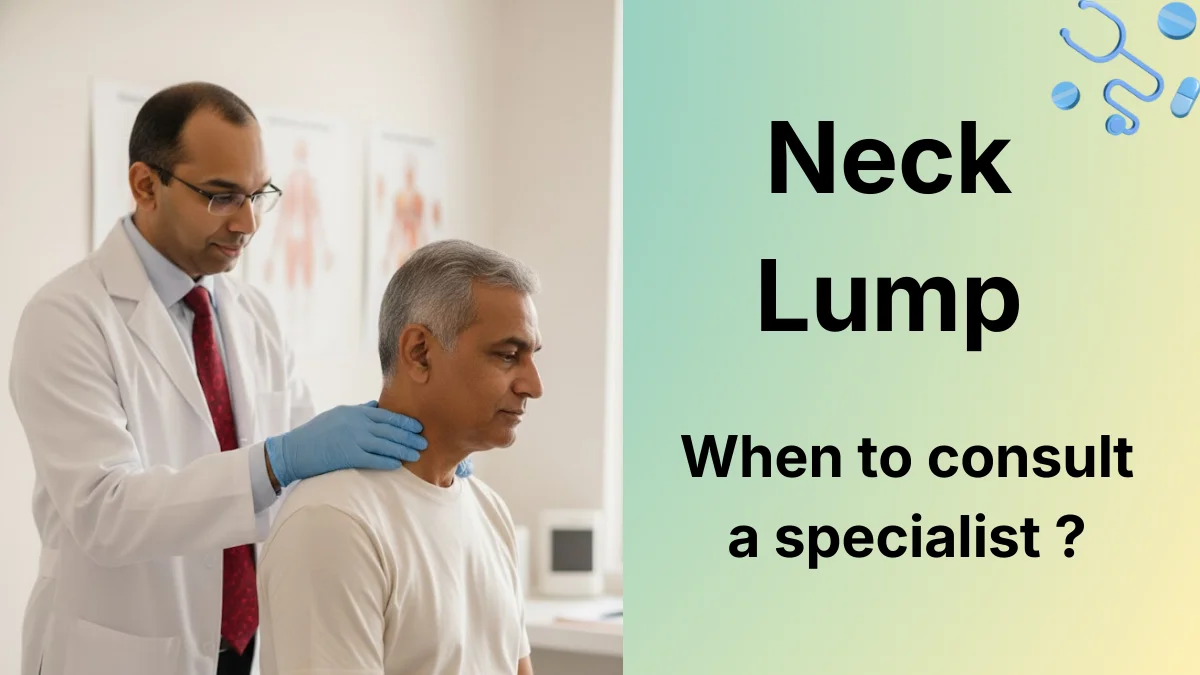
A new or growing lump in this area should be checked. Our guide explains when a neck lump is a concern.
Diagnosis at THANC Hospital
Dr. Vidhyadharan confirms the diagnosis before deciding on treatment:
- Clinical examination of the gland, the facial nerve and the neck.
- Ultrasound scan to assess the lump.
- Fine-needle aspiration cytology (FNAC), a simple needle test, which often gives a clear Warthin's diagnosis.
- MRI in selected cases, for larger or deeper lumps.
A confident, benign diagnosis is what allows a calm, considered decision about whether to watch the lump or remove it.
Warthin's Tumour Versus Other Parotid Lumps
A Warthin's tumour is one of several lumps that can appear in the parotid gland. The other common benign tumour is the pleomorphic adenoma, which carries a small long-term risk of turning cancerous and is therefore usually removed. A small number of parotid lumps are salivary gland cancers. The needle test (FNAC) is what tells these apart. This matters because a Warthin's tumour, being benign and very low risk, can sometimes be watched, whereas a pleomorphic adenoma or a possible cancer is usually removed. Getting the diagnosis right first avoids unnecessary surgery and makes sure nothing serious is missed.
Treatment Options
Watchful Waiting
Because a Warthin's tumour is benign and slow-growing, a small, confirmed one can sometimes simply be monitored, especially in older patients or those for whom surgery carries extra risk. Monitoring means regular review and, if needed, a repeat scan, so any change is noticed. Dr. Vidhyadharan will explain when watching is a reasonable choice for you.
Surgery
Surgery is advised if the lump is growing, causing symptoms, uncertain on the needle test, or if you would simply prefer to have it removed. The operation is a parotidectomy, usually a superficial (partial) one. This removes the outer part of the gland where these tumours sit, while carefully protecting the facial nerve that runs through the gland. For a small, well-defined tumour, an even more limited removal may be possible. Because the tumour is benign and does not invade the nerve, the facial nerve is preserved in the great majority of cases.
What to Expect
Before surgery. Examination, ultrasound and FNAC to confirm the diagnosis. Dr. Vidhyadharan explains the plan and the risks.
Day of surgery. A parotidectomy under general anaesthetic, with the incision hidden in front of the ear and in a neck crease.
Recovery. Most patients stay one to two days and return to normal activities within two to three weeks.
Recovery and Aftercare
- Wound care. The incision heals over one to two weeks. Stitches are removed at the first visit.
- Facial movement. Any temporary weakness is monitored and usually recovers. Dr. Vidhyadharan checks facial nerve function at each visit.
- Follow-up. Both glands are examined, since these tumours can occur in more than one place.
Outcomes
Results after surgery for a Warthin's tumour are excellent. The tumour is removed completely, recurrence is uncommon, and protecting the facial nerve means most patients keep normal facial movement. The hidden incision gives a good cosmetic result.
Why Choose Dr. Vidhyadharan at THANC Hospital
- Head and neck surgical oncology training. MCh (Head & Neck Surgery) and European Board certification (FEB-ORL HNS), with expertise in salivary gland and facial nerve surgery.
- Facial nerve protection using careful technique and nerve monitoring.
- 3000+ head and neck operations, the volume linked to better outcomes.
- Discreet, well-hidden incisions for a good cosmetic result.
- Full support at THANC Hospital, with in-house imaging and pathology.
This is part of our wider salivary gland and head & neck care.
Treatment Cost and Insurance
The cost depends on the extent of surgery, the room category and the length of stay. Most major health insurers in India cover medically indicated parotid surgery, including cashless treatment at empanelled hospitals. Eligible patients may also use government schemes such as Ayushman Bharat (AB-PMJAY) or the Tamil Nadu CMCHIS.
THANC Hospital gives a clear, itemised estimate during your consultation. To see Dr. Vidhyadharan Sivakumar, request an appointment online.